Profile view of a bearded man wearing a black baseball cap and a dark gray T-shirt against a plain light background.

Why your AC compressor won't kick on in Arizona

Step 1 of 3: Equipment

A compressor that won't start usually comes down to one of a handful of things: a bad capacitor, a tripped breaker, a failed contactor, or the system shutting itself down to protect against a problem elsewhere. In Arizona, the heat pushes these parts harder than almost anywhere else, so capacitors wear out sooner and contactors burn from constant cycling. If your outdoor unit hums but the fan doesn't turn, or you hear a click and nothing happens, that points to the capacitor or contactor rather than the compressor itself. If there's no sound at all, check the breaker before anything else. Either way, running the system while the compressor is dead can damage it further, so it's worth getting it looked at before you try the thermostat again and again. The part at fault is usually cheap to replace on its own, but figuring out which one it is takes someone with a meter, not a guess.

Power costs 15.26 cents per kilowatt-hour statewide

At 15.26 cents per kilowatt-hour, every hour your compressor struggles to start or short-cycles instead of running normal, steady cycles adds up on the bill. A contactor or capacitor that's failing often makes the unit draw power without actually cooling, so you pay for the attempt even when the air isn't moving.

EIA-861 2025 statewide residential average

A smiling woman with dark shoulder-length hair in a cream V-neck sweater sits at a marble counter with a glass of red wine, with a kitchen and softly lit living room behind her.
A woman in a dark green sweater laughs while seated at a marble kitchen island with a glass of red wine, with open shelving, cabinets and a living room visible behind her.
A woman with long dark hair in a cream knit sweater laughs while looking off to the side, seated at a counter with a glass of red wine, in a dimly lit living room with a sofa, lamp, framed pictures and houseplant behind her.
A smiling woman with long dark hair in a beige sweater sits at a marble kitchen counter with a glass of red wine, with a dimly lit living room behind her.
A man seen from behind raises his hand to wave at a woman standing in the open front doorway of a single-story house with gray shingle siding, white columns and a gabled porch entry.

If it's not running, your house is already warming up

When the compressor won't start, the indoor fan may still blow air, and that can fool you into thinking the system is working. It isn't. Without the compressor, that air isn't being cooled, just moved around. On a 110 degree day, a house with no cooling going can climb fast, and by the time you notice the air coming out of the vents feels wrong, you've already lost ground against the heat.

A capacitor that's starting to go or a contactor with pitted contacts doesn't always fail all at once. It can get you partway there, click, hum, and quit, over and over, which is hard on the compressor itself and easy to miss until the day it stops for good. Rather than spend the afternoon on the phone with different repair companies describing the hum and the clicking twice over, you can get matched with a contractor who works on these systems and have them call you to sort out what's going on.

A gray upholstered sofa with a textured cushion sits beside a dark round side table holding a vase of green foliage, with a table lamp and sheer-curtained window behind.
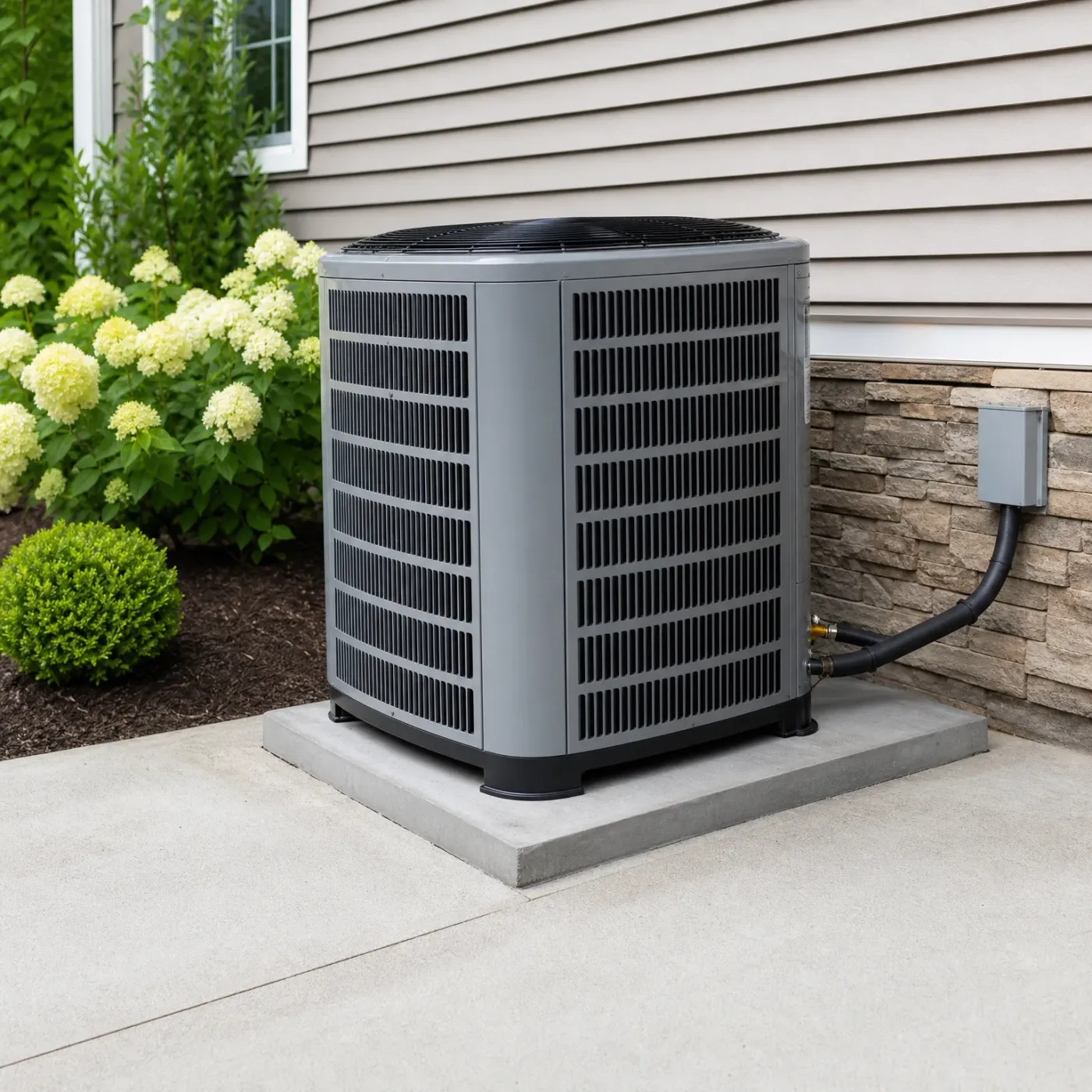
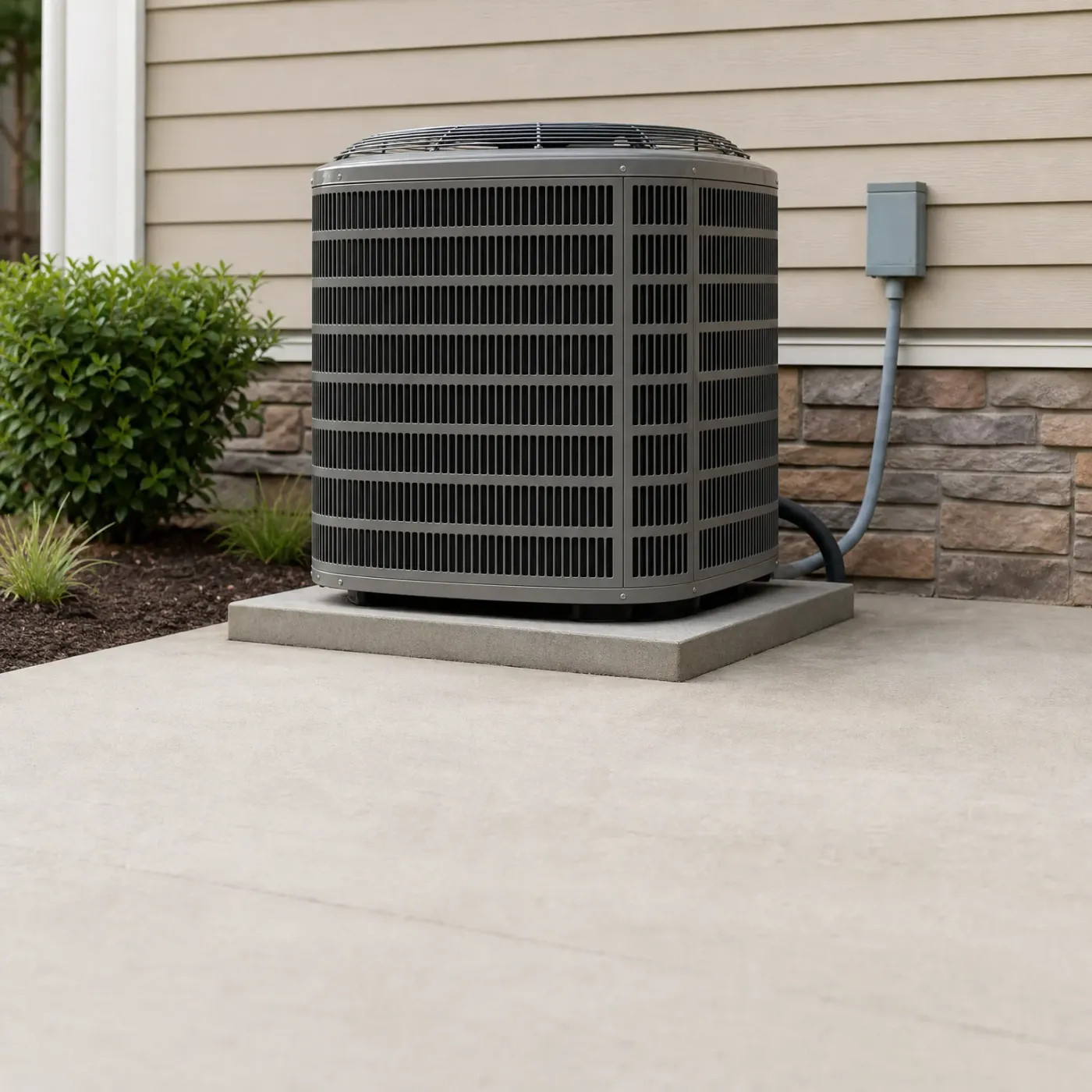
A gray outdoor air conditioning condenser unit on a concrete pad beside a house with horizontal siding and a stone veneer base, with refrigerant line and electrical disconnect box on the wall and flowering shrubs to the left.

Compressor starting normally

The unit hums on within a second or two of the thermostat calling for cool air. You'll hear the fan and feel cold air at the vents within a few minutes. The fins stay clean enough to let heat off the coil the way they're supposed to.

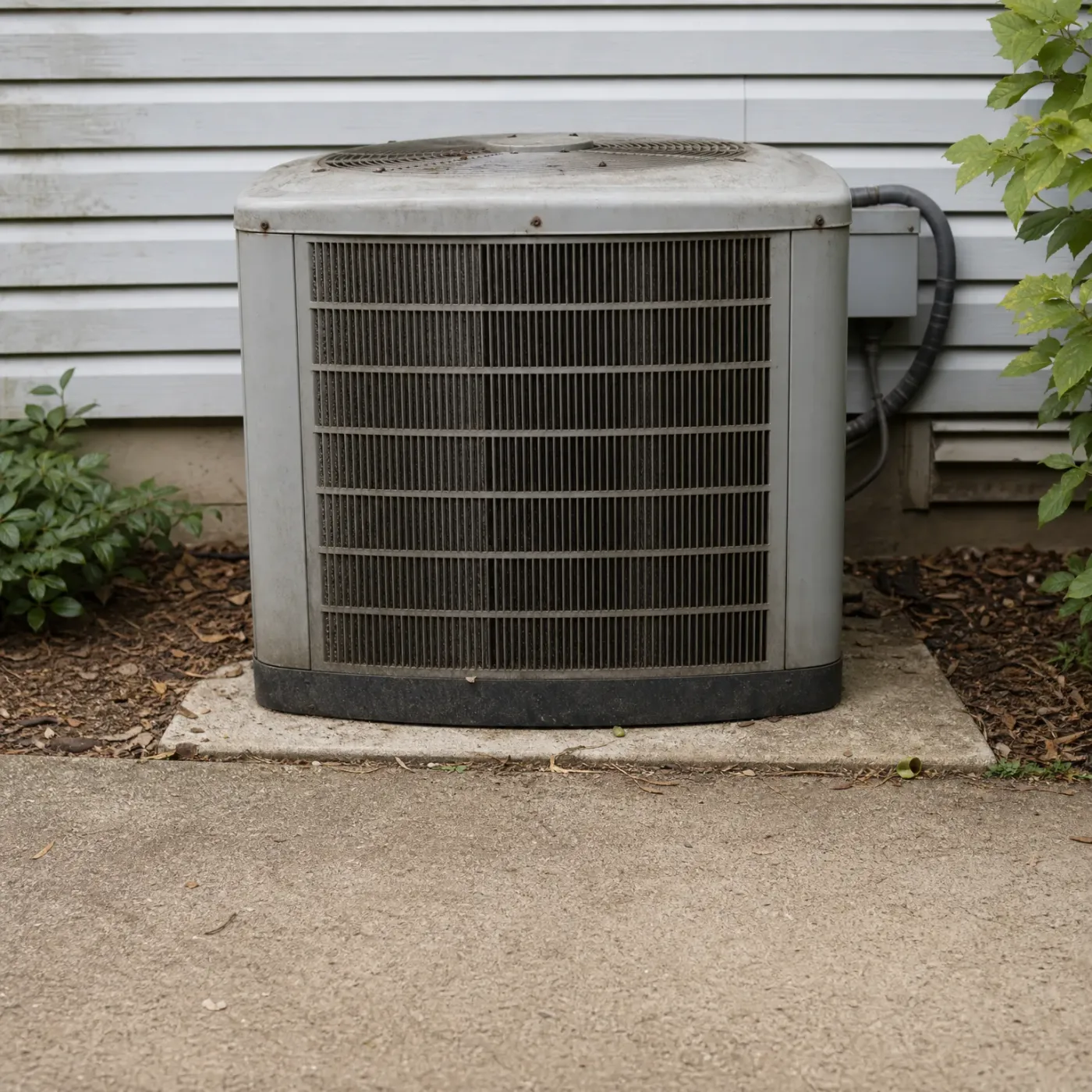
An outdoor air conditioner condenser unit on a concrete pad beside a house with light gray horizontal siding, with mulch and green shrubs on either side and a concrete walkway in the foreground.

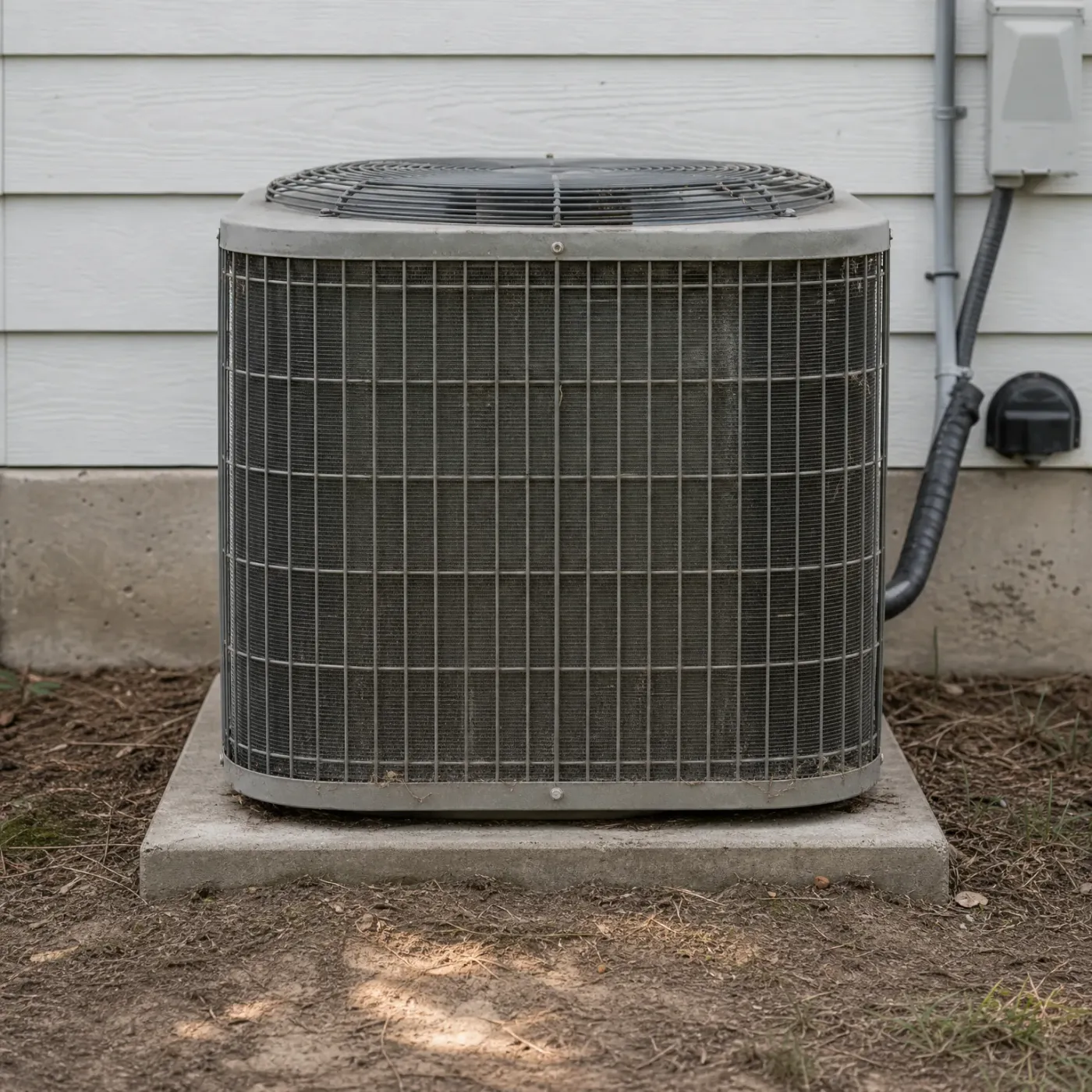
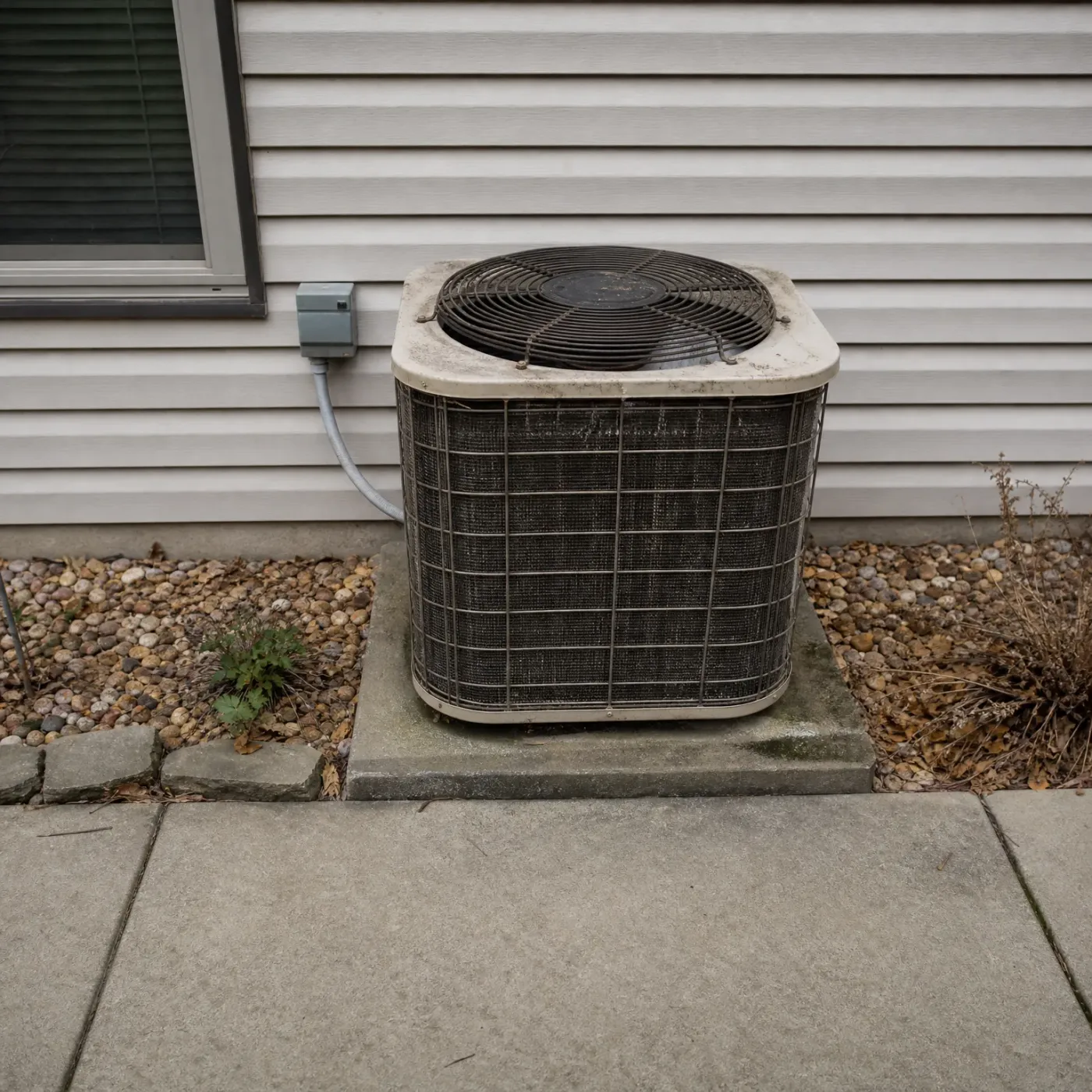
Compressor that won't start

You hear a click or a hum, then nothing. The fan outside might spin while the compressor itself stays silent. Dirt packed into the fins like this traps heat against the coil, and in Arizona summers that extra strain is often what pushes a weak part past the point of starting at all.

Diagnose It Yourself or Call In Help

Fix it yourself

  • Resetting a tripped breaker takes a minute, but if it trips again once the compressor tries to start, something downstream is pulling too much current.
  • A dirty outdoor coil caked with dust can make the compressor shut off on high pressure, and hosing it down (power off first) sometimes gets it running again.
  • You can check the disconnect box next to the outdoor unit is fully seated, since a loose pull block will keep the compressor from getting power at all.
  • Swapping a capacitor or contactor yourself means working inside a cabinet with live high-voltage parts, and a capacitor holds a charge even with the power off.
  • Guessing wrong on which part failed means buying a replacement that doesn't fix it, while the compressor keeps short-cycling and running up your bill in the heat.
  • If the compressor is seized or grounded, no amount of part-swapping brings it back, and that's a diagnosis that takes meter readings, not a guess.

Have it diagnosed

  • A contractor can test the capacitor, contactor and wiring with a meter and tell you in one visit which part actually failed.
  • Finding and calling around for someone licensed to work on a system under warranty or with a refrigerant charge takes time you'd rather not spend in July or August.
  • Explaining the symptoms over the phone to three different companies, then comparing three quotes, is its own chore on top of the heat already building in the house.
  • A contractor who diagnoses the real cause can tell you if the compressor itself is damaged versus a part feeding it, which changes what happens next.
  • Getting matched with someone who already knows the problem you're describing means you're not repeating it from scratch with every call.
  • Once you're matched, the contractor reaches out to you, so the search for who's available and licensed in your area is off your plate.
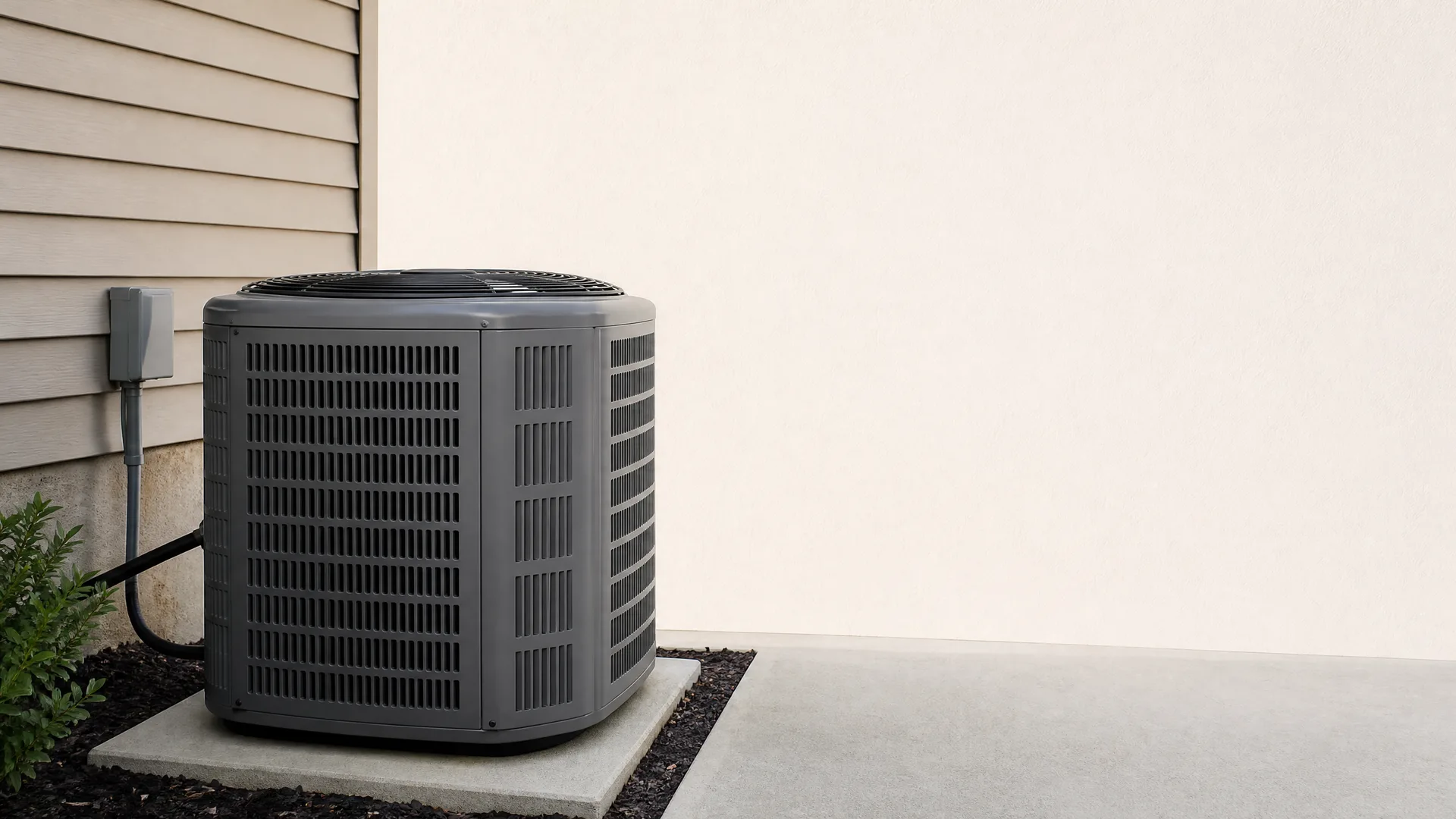
A gray outdoor air conditioner condenser unit on a concrete pad beside a house with horizontal siding and a light stucco wall, with a disconnect box and refrigerant lines on the wall and a shrub and mulch bed at left.

The capacitor's job at startup

A compressor motor needs a strong jolt of current to get the rotor moving, more than normal running current. The start capacitor stores that charge and releases it in the first second. Arizona heat keeps the compressor cycling hard through the summer, and that heat is what wears a capacitor down early. Once it weakens, the motor gets less of that initial push and can't turn, even though power is reaching the unit.

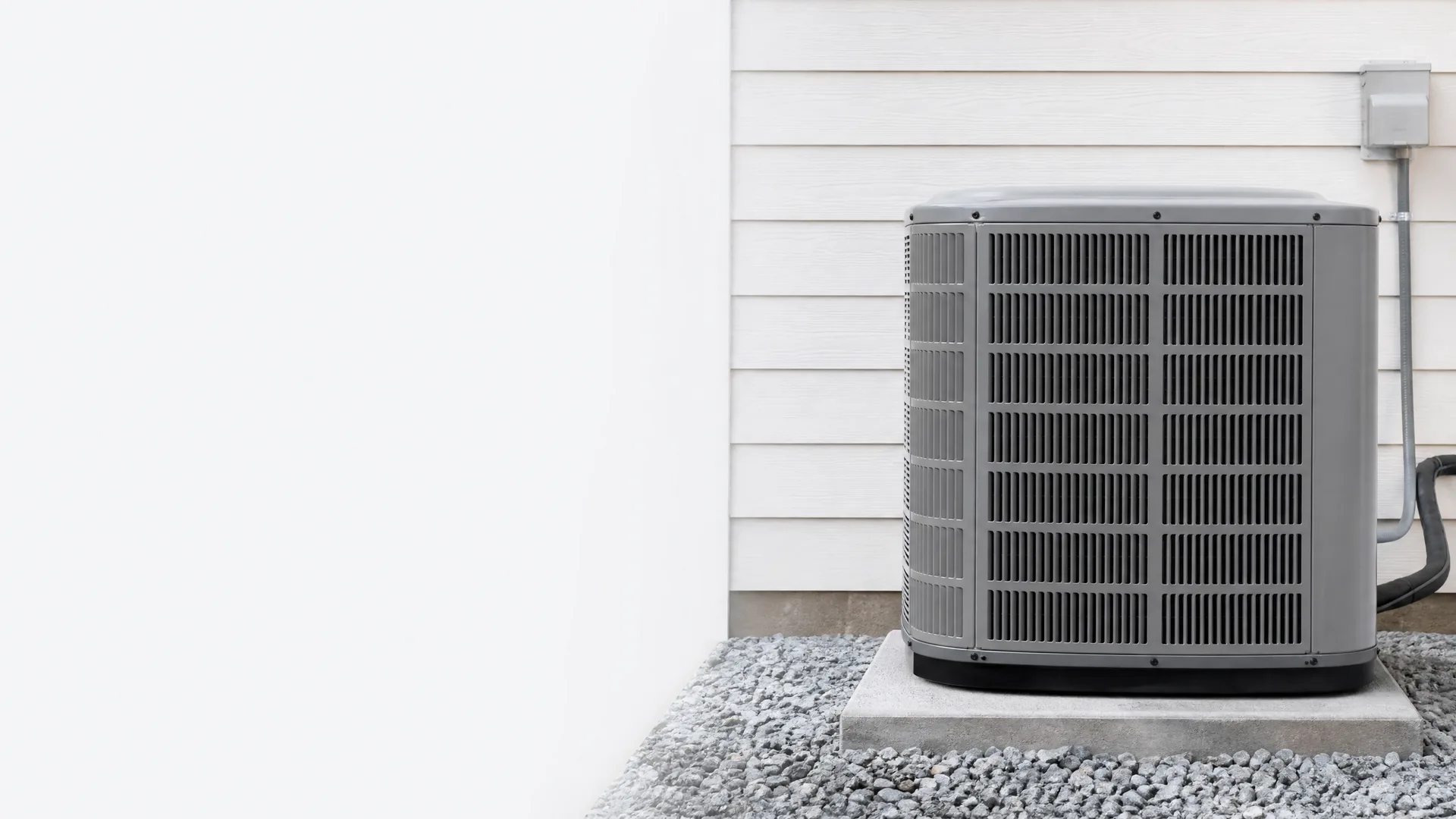
A gray outdoor air conditioning condenser unit on a concrete pad surrounded by gravel, next to a white horizontal-lap-sided house wall with an electrical box and conduit, against a blank white background on the left.

Why the system protects itself

Outdoor units here run against higher head pressure simply because the air they're rejecting heat into is hotter. A control board or pressure switch reads that strain and will cut the compressor off rather than let it run against conditions that could damage the motor or the coil. That's why a system can have power, a working thermostat call, and still refuse to start the compressor until whatever triggered the lockout is cleared.

Why does your house feel hotter than the thermostat says?

You'll notice it in the rooms farthest from the thermostat first. They stay warm while the air coming out of the vents feels weak or just plain room temperature. The outdoor unit might hum without starting, click and stop, or stay silent while the indoor fan keeps running like nothing's wrong. Some homeowners catch a burning smell near the breaker panel if a wire or connection is overheating. None of this gets better by waiting. A compressor that can't start but keeps trying puts a load on the rest of the system, and a house that can't shed heat in an Arizona summer gets uncomfortable fast, especially for anyone inside during the afternoon.

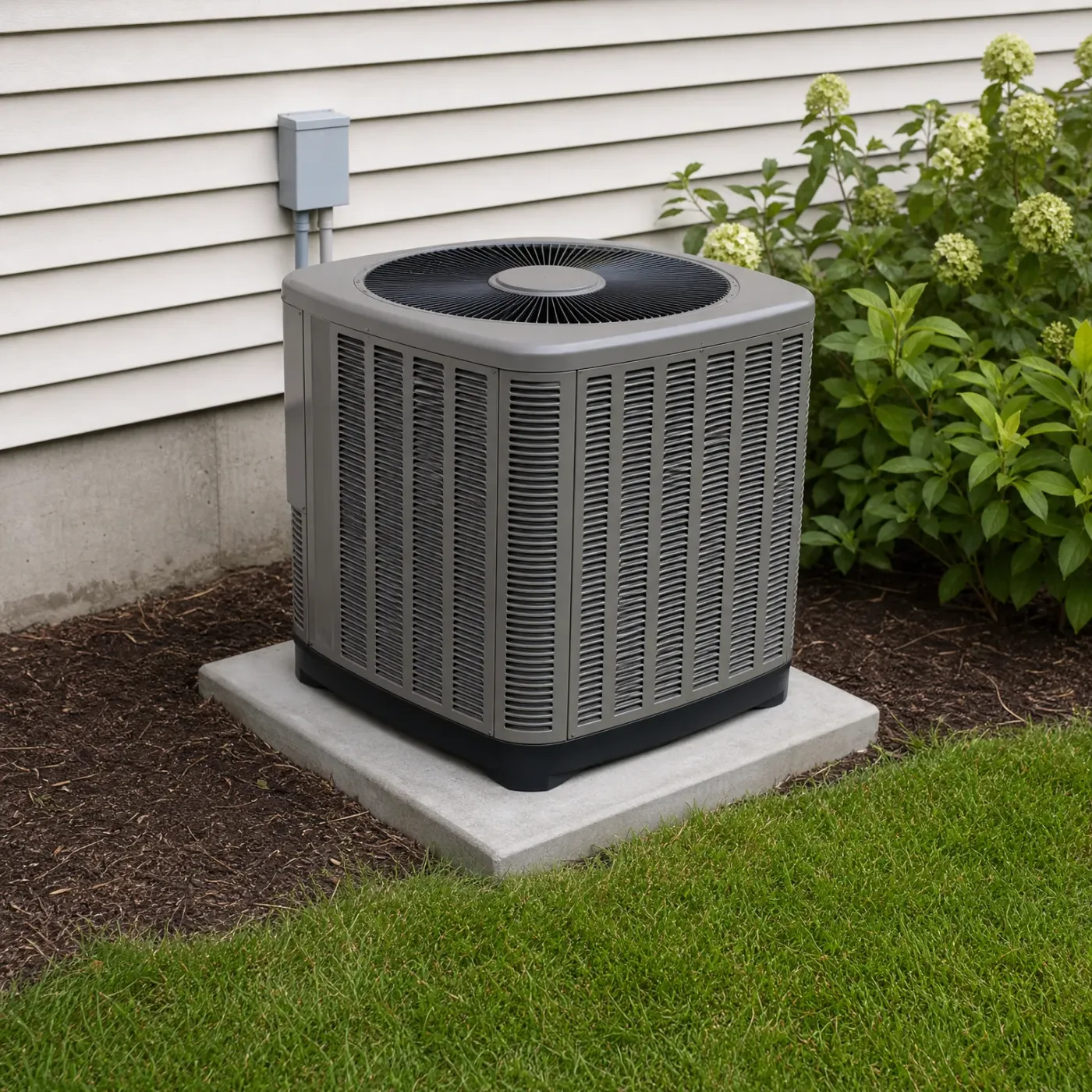
A gray outdoor air conditioner condenser unit on a concrete pad beside a house with horizontal vinyl siding, surrounded by mulch, flowering shrubs, and lawn.

Clean coil, clear airflow

This condenser sits on its pad with the fins clean and open. Air pulls through the coil and off the unit the way the system was built to move it. Mulch and grass nearby aren't touching the cabinet or blocking the sides.

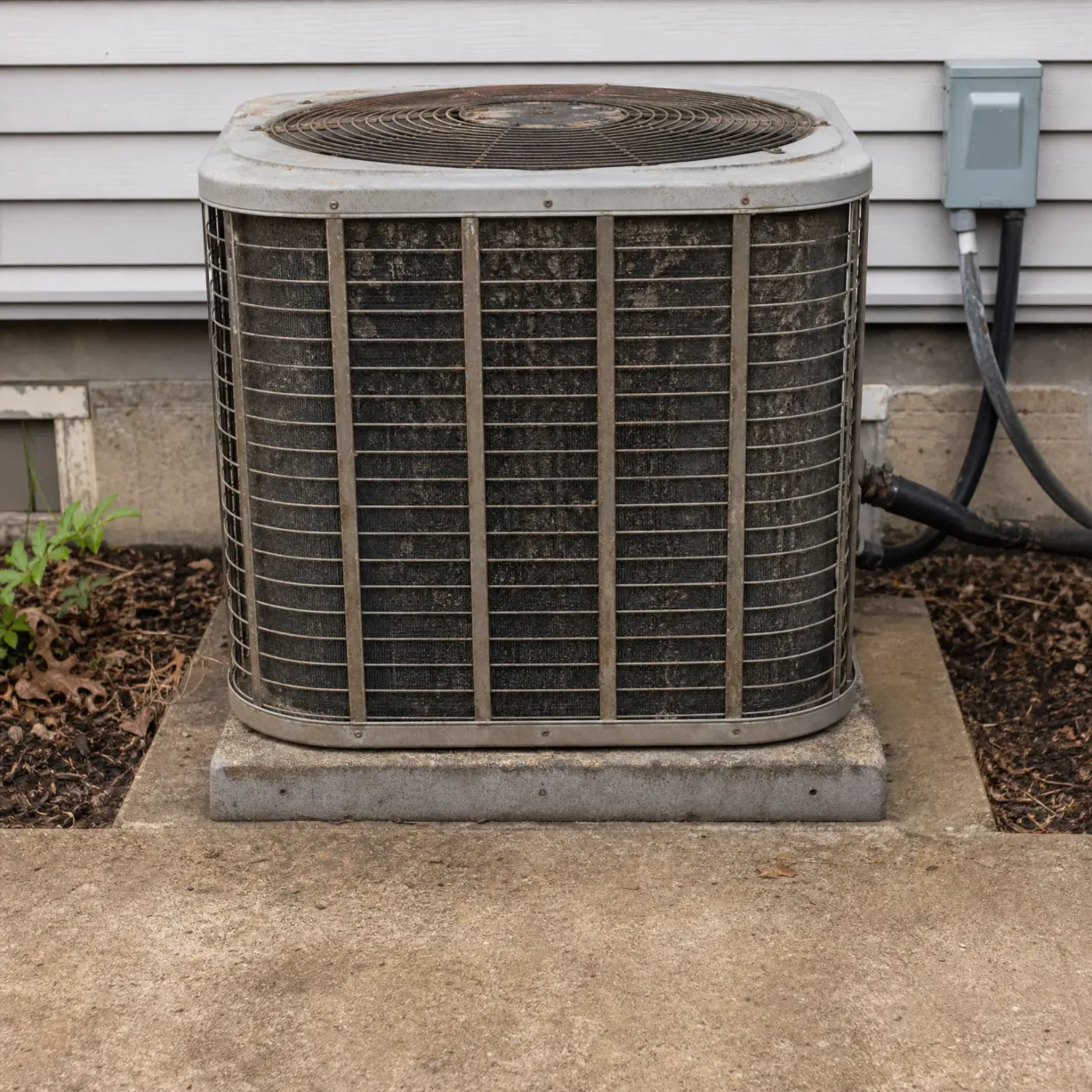
A weathered outdoor air conditioning condenser unit on a concrete pad beside a house with light horizontal siding, an electrical disconnect box and conduit on the wall, and mulched soil on either side.

Coil coated, airflow choked

Here the fins are packed with dirt and grime, so heat can't leave the coil. The compressor has to work against that, and in Arizona heat it can trip the unit's own high pressure protection before it ever gets a full cycle in. The conduit and disconnect box nearby are worth a look too if the unit's cutting off.

A smiling bearded man in a navy sweater sits at a candlelit dinner table with a glass of red wine, a bowl of salad, and plates of food in the foreground.
A woman with dark hair in a bun reclines on a sofa with her eyes closed, wrapped in a cream fleece blanket, a closed blue hardcover book resting in front of her, with a lit lamp and a vase of dried flowers in the background.

A pro who works on air conditioners

A compressor that won't start isn't something you can wait out until it feels like fixing itself. By the time you've noticed warm air at the vents, checked the breaker, and maybe popped the access panel to look for a swollen capacitor, you've already spent the part of the day you don't have in a house that's heating up past what the thermostat says. Finding someone qualified usually means more of that same kind of time: searching, calling a few numbers, describing the same symptoms over and over, waiting to see who calls back first. Submitting this request skips that part. One contractor who works on these systems in your area gets your information and reaches out to you directly. You're not left sorting through quotes or explaining the hum and the warm air again to the next person on the list. The heat isn't going anywhere, so the sooner someone qualified is looking at the actual unit, the sooner you know what's wrong with it.

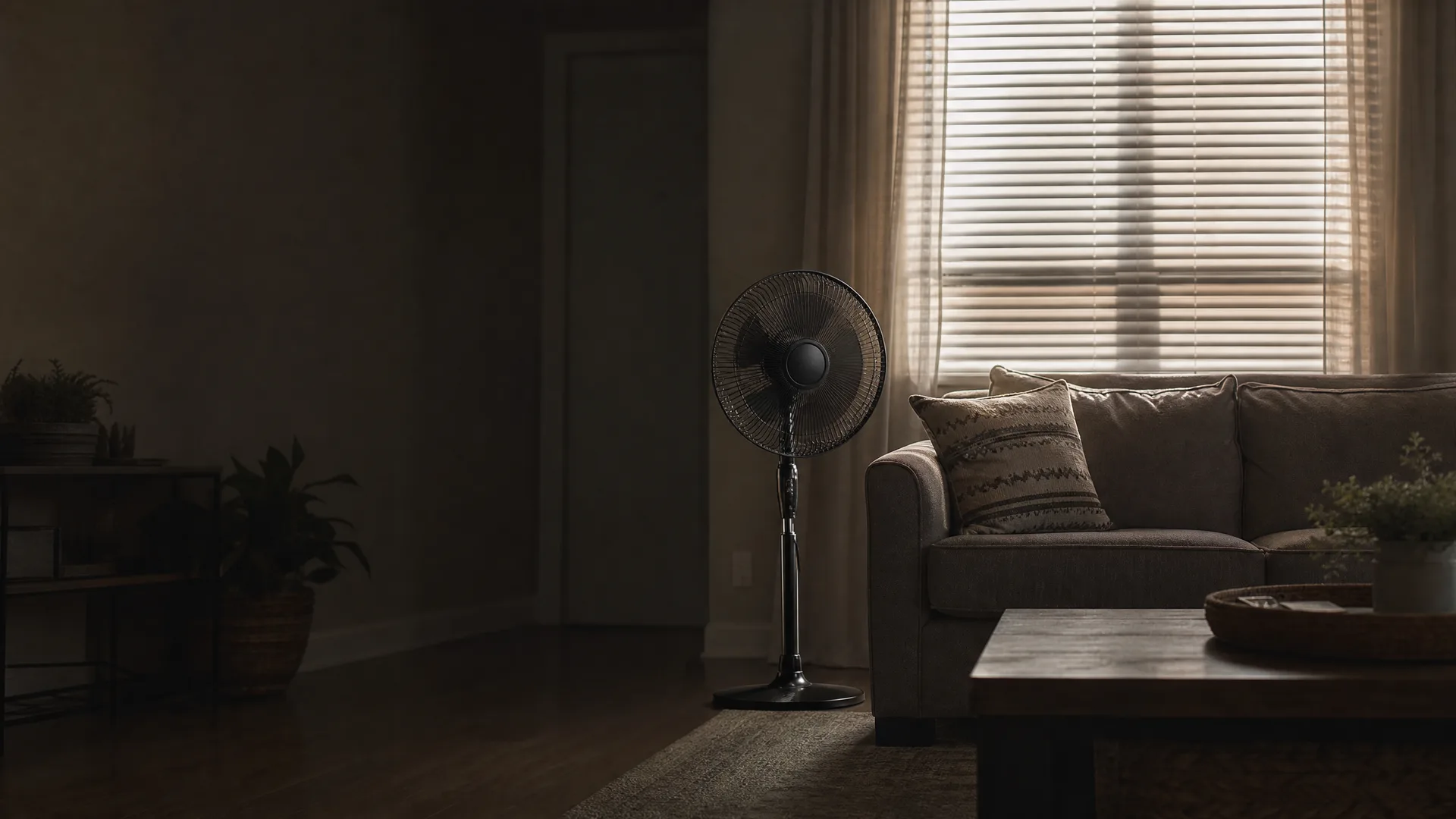
A dimly lit living room with a black pedestal fan on a wood floor beside a gray sofa with a patterned pillow, a wooden coffee table in the foreground, potted plants at left, and a curtained window with blinds behind.

By three in the afternoon the blinds are already drawn against the sun, the way they have been since May. The fan beside the couch pushes air around the room instead of cooling it. You keep checking the thermostat like it might change its mind, but it's stuck five degrees above where you set it. Outside, the unit is silent. No hum, no click. The dog has moved off the tile and onto the air vent itself, looking for whatever cold air is left in the house. You already know the drill by now, the glass of ice water, the fan pointed at your chair, waiting it out until someone can look at the unit.


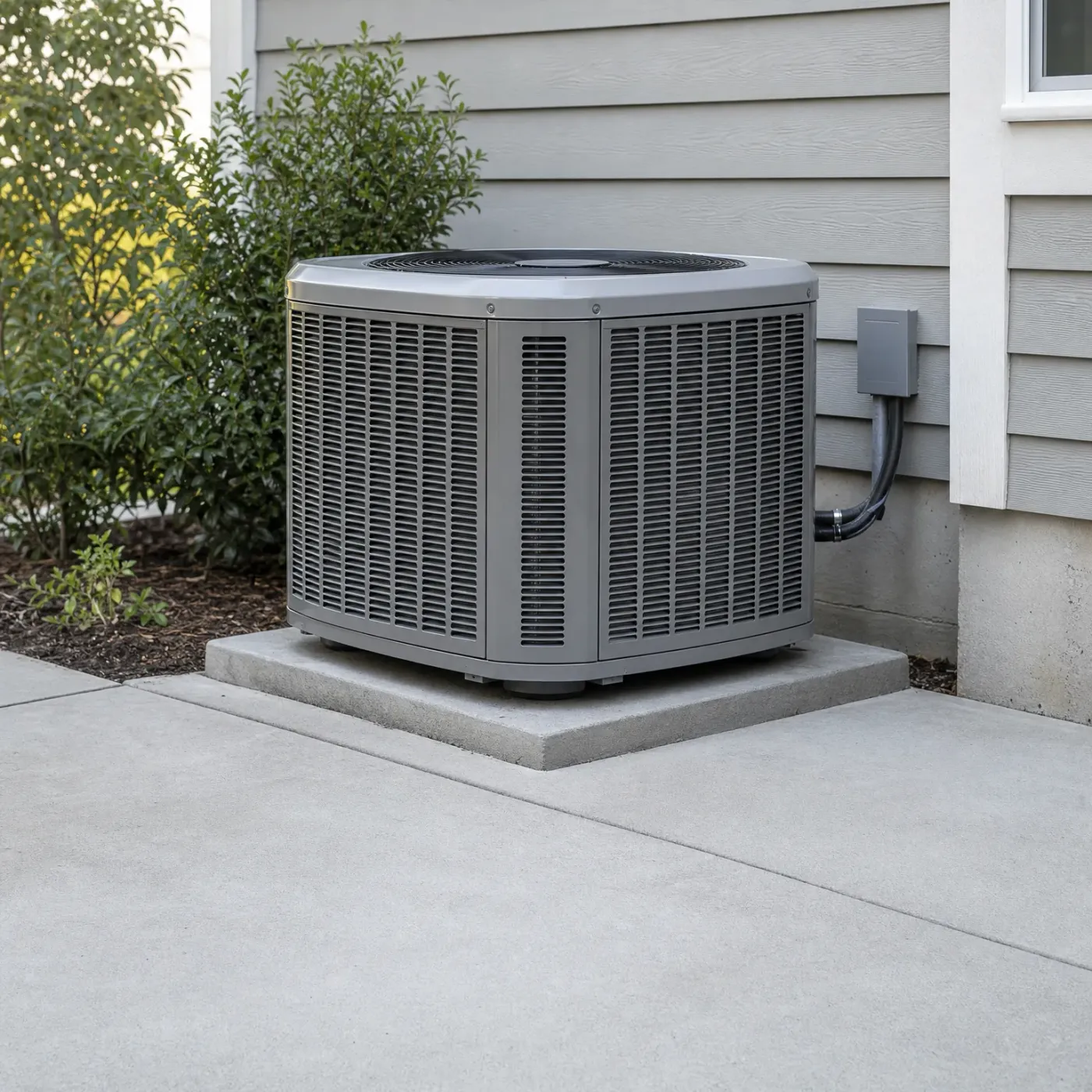
A gray outdoor air conditioner condenser unit on a concrete pad beside a house with horizontal lap siding, with a wall-mounted disconnect box and conduit to its right and shrubs to the left.
A clean, open coil lets the unit pull heat off the fins and shut off exactly when the thermostat is satisfied.
An outdoor air conditioning condenser unit on a concrete pad beside a house with horizontal lap siding, with a conduit and electrical disconnect box on the wall at right.
A coil caked in dust makes the compressor work against its own heat, and that's often when it quits trying to start at all.
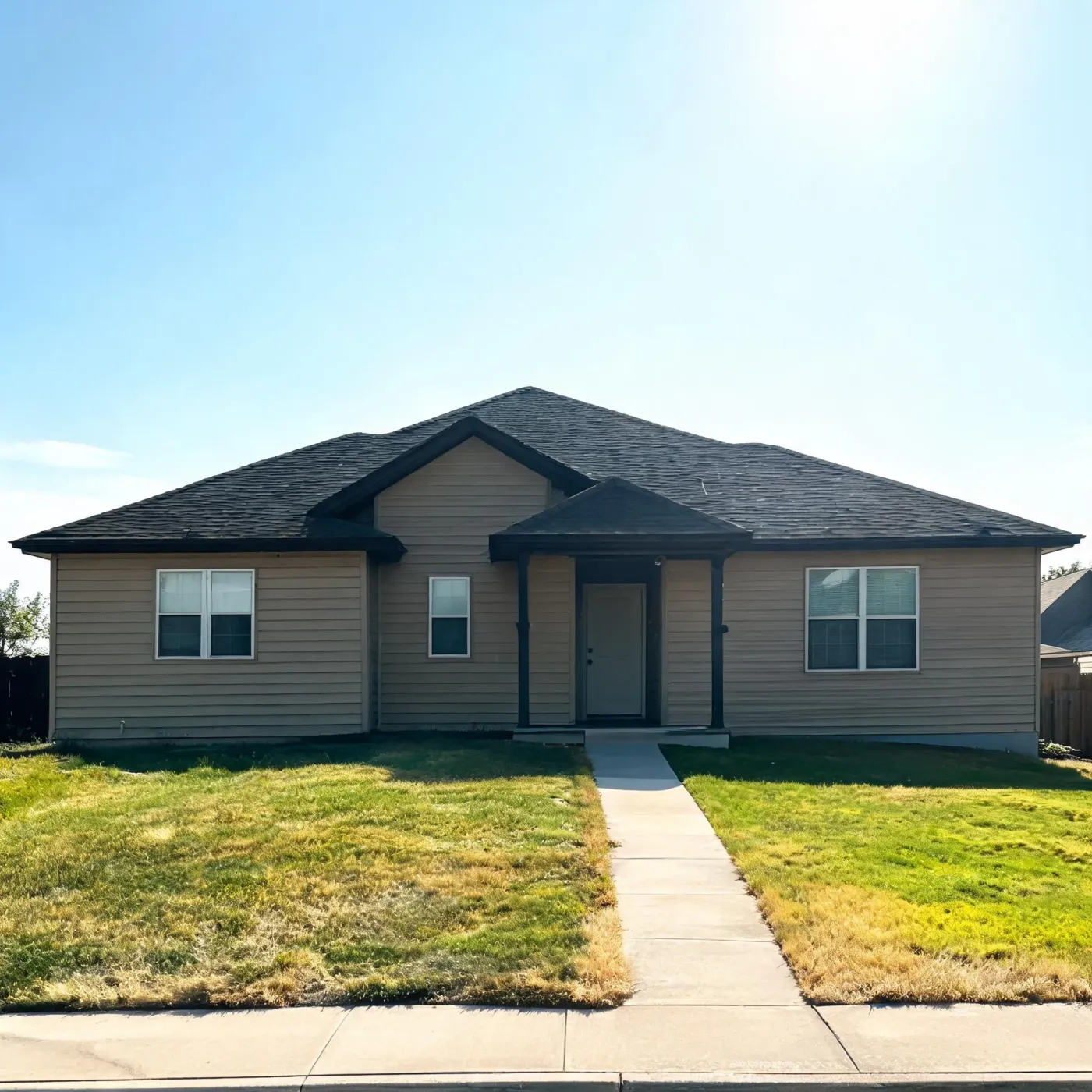
Single-story house with tan horizontal siding and a dark shingled hip roof, fronted by a patchy green and brown lawn and a concrete walkway leading to the covered entry.

Average summer dew point in Arizona runs 47°F, according to NOAA climate data, which is dry by any measure. Dry air works in your favor when the compressor is healthy, since the coil sheds heat fast and the unit shuts off right when it should. But when a capacitor is weak or a contactor is pitted, that same dry heat means the compressor is drawing hard almost every time it tries to start, with no humidity to soften the load on the motor. That's why a borderline part here tends to fail outright instead of just struggling along. You'll notice the outside unit clicking or humming without catching, rather than easing into a normal cycle.

NASA POWER T2MDEW county cells weighted by homes

An outdoor air conditioner condenser unit on a concrete pad beside a house with light gray vinyl siding, with a gray electrical disconnect box and conduit on the wall, gravel beds and dried plants nearby, and a concrete sidewalk in the foreground.
Before you get your air conditioner repair
A gray outdoor air conditioning condenser unit on a concrete pad beside a house with horizontal siding and a stone veneer base, with a wall-mounted disconnect box and conduit, next to a shrub bed and a concrete patio.
After you get your air conditioner repair

Where this leaves you

  • A compressor that won't start comes down to a bad capacitor, a tripped breaker, a failed contactor, or a protective shutdown from a problem elsewhere in the system.
  • Arizona heat pushes these parts harder than milder climates do, which is why they tend to fail here first.
  • A fan running without a compressor can fool you into thinking the system works, while the house keeps warming up room by room.
  • A dirty outdoor coil makes the compressor fight its own heat, often until it stops trying to start at all.
  • Checking a breaker or peering at a capacitor yourself still leaves you needing someone licensed to diagnose and fix the actual part that failed.
  • Getting matched with a contractor means skipping the search, the phone calls, and repeating the same explanation to every company you reach.

A compressor that won't start has a handful of likely causes, and none of them get better by waiting through another hot afternoon. The capacitor, the contactor, the breaker, a coil caked with dust forcing a protective shutdown. These are mechanical, electrical problems with a real fix, not something that clears up on its own once the sun goes down. Arizona summers put more strain on these parts than most climates do, which is part of why this happens here as often as it does. In the meantime, the fan blowing room-temperature air can make it look like the system is still working while the house actually keeps climbing past what the thermostat says it should be.

You could spend the afternoon looking up licensed contractors near you, calling a few, explaining what the unit is doing to each one, then waiting to see who calls back and comparing what they quote you. Or you could skip that part. Getting matched with a contractor means you explain the problem once, to someone who already knows the system needs a look, instead of repeating yourself to every company in the search results. The diagnosis and the repair still take a licensed technician, in person, looking at the actual capacitor or contactor or coil. What you don't have to do is spend your evening finding that person on your own.

A covered porch with a wood front door with six upper glass panes, a lantern wall sconce, tapered column on a stone base, potted ferns and flowers, a woven doormat, and wide steps leading to a paver walkway bordered by shrubs and white hydrangeas.
A beige upholstered sofa with a cream cushion and chunky knit throw sits beside a white-framed window, with a leafy potted plant in a stone vase against a tan wall.
Sunlit corner of a room with a linen curtain beside a window, built-in shelves holding ceramic vases, wooden bowls, a potted green plant, stacked books and a woven basket, above a textured rug.
A dark wood three-drawer dresser against a pale wall holds a tall ceramic vase with leafy branches, stacked books and a shallow bowl, with a framed print above, a woven basket on the wood floor at left, and an upholstered sofa with a green pillow in the foreground.
A cream upholstered sofa with a textured ivory cushion and a rust-colored cushion sits beside a window with sheer linen curtains, with a potted leafy plant behind it and a wooden bowl on a wood table in the foreground.

Get your air conditioner to the right pro

Describe your air conditioner job once, to one pro.

Answer a few questions

No charge to send it. You decide if you hire them.