




An outdoor air conditioning condenser unit on a concrete pad beside a house with stone veneer and vertical board siding, with a small shrub and mulch bed lit by a ground light at dusk.

A local pro for your air conditioner maintenance

How to get your AC ready for an Arizona summer

By the time triple digits hit, you want to know your AC will carry the summer without quitting on you. This page covers what a maintenance visit checks before the heat sets in, from refrigerant levels to the condenser outside. Skip calling around. Answer a few questions and a contractor who covers your area will reach out.

Get my match

Getting your AC ready for an Arizona summer means having it checked before the heat arrives, while it still only has to handle mild days, not 110 degrees. A maintenance visit checks refrigerant level, cleans the condenser coil outside, and tests the capacitor and contactor, the parts that take the hardest hit once the system runs nearly nonstop. Dust and the dry heat here wear on the condenser faster than they do on systems elsewhere, and a coil caked with it forces the whole unit to work harder to move the same heat out of your house. Catching a weak part in March or April means it gets replaced on your schedule, not during a July afternoon when the house is already at 95 and every AC contractor in the area has a backlog. The system that gets looked at now is the one that keeps up when the temperature stops giving it any break.

A gray-haired bearded man in a dark coat and scarf dusted with snow stands smiling in a dimly lit entryway with a white front door, a side table with a lit lamp, an oval mirror, and a patterned rug.
An older bearded man in a dark snow-dusted coat and gray scarf stands just inside a dimly lit home entry, with a framed picture, lit table lamp, and an adjoining room with a fireplace behind him, and snow visible through the open door.
A gray-haired, bearded man in a dark snow-dusted coat stands smiling in a dimly lit entry hall with a staircase, a lit table lamp, a framed picture, and a living room visible through a doorway.
An older man with gray hair and a beard, wearing a dark jacket dusted with snow, stands smiling in a dimly lit hallway with lamps and a living room visible behind him.

What exactly does an AC maintenance visit check before summer?

You want to know what you're actually paying for when someone comes out to check your AC before summer. It helps to know what gets looked at and why each piece matters once the heat sets in, instead of just trusting that "maintenance" covers it.

It checks the parts that fail first when the heat hits hardest

A technician checks refrigerant level first, because a system low on refrigerant has to run longer to cool the same space, and in Arizona that difference shows up fast once it's 110 outside. The condenser coil outside gets cleaned, since dust and debris cut down how well it sheds heat. The capacitor gets tested, because a weak one can keep the compressor from starting at all on the day you need it most. The blower motor and electrical connections get checked too. Catching a weak part in April means it gets replaced while the system is only working against mild days, not during a July afternoon when a failed AC turns a house into an oven within hours.

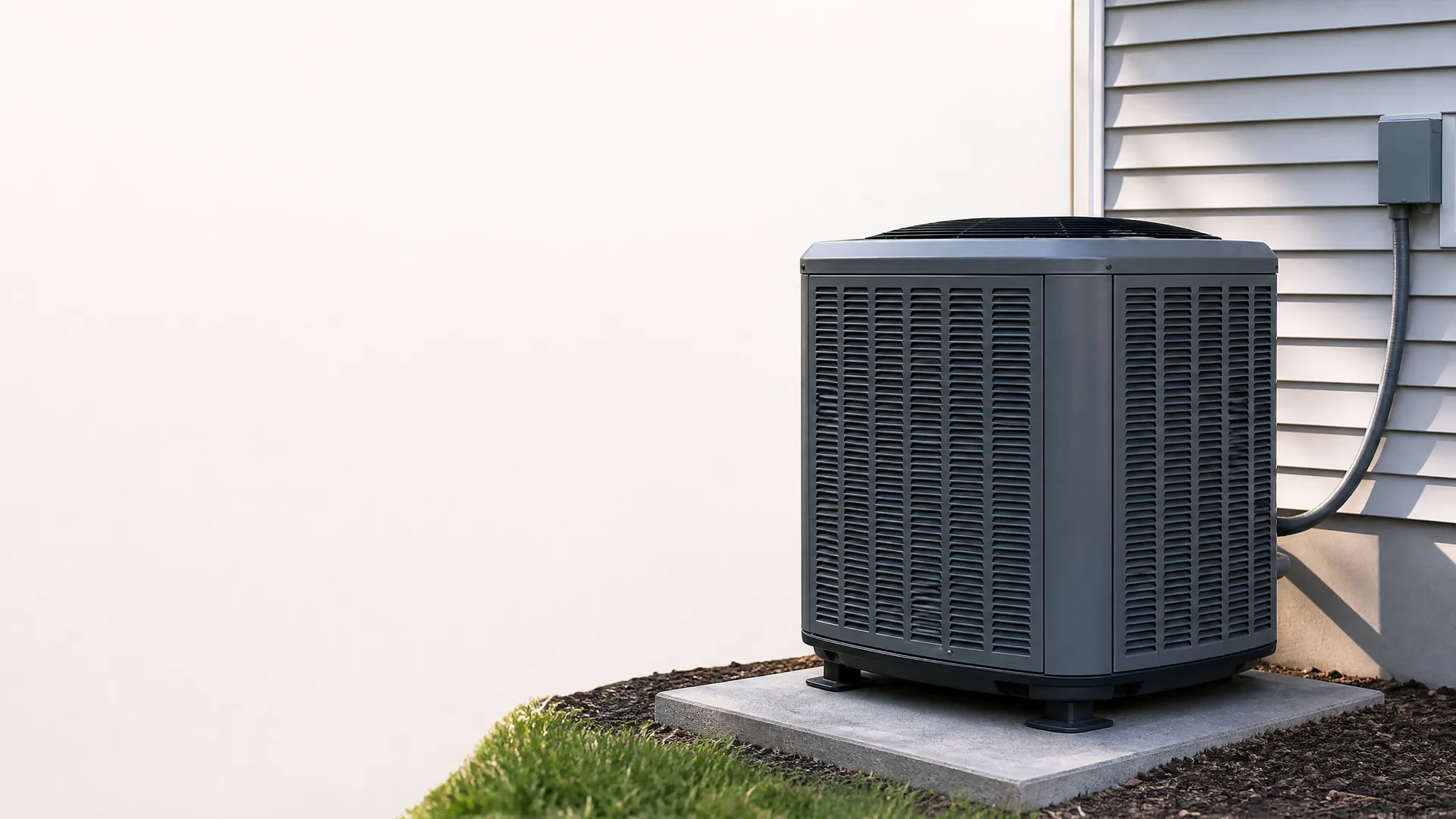
An outdoor air conditioner condenser unit on a concrete pad beside a house with light horizontal siding, with a small electrical disconnect box on the wall, mulch and shrubs at left, and a plain white wall and concrete slab at right.

The condenser works harder here

Your outdoor unit dumps the heat from inside your house into the air around it. When that air is already 110 degrees, the unit has far less room to push that heat into, and it has to run longer to get the same result. A condenser coil caked with dust or lint makes that worse, since it blocks the airflow the unit depends on to shed heat at all.

A dark gray outdoor air conditioner condenser unit on a concrete pad beside a house with horizontal siding and a plain light wall, with mulch and grass in the foreground and a conduit and electrical box on the wall.

A low charge shows up fast

Refrigerant doesn't get used up the way fuel does. If the level is low, it's because the system has a leak somewhere, and running it low makes the compressor work harder to move the same amount of heat. In Arizona, where the unit is running most of the day for months, that extra strain shows up sooner than it would somewhere milder.

Power costs 15.26 cents per kilowatt-hour statewide

At 15.26 cents per kilowatt-hour, every hour your AC runs longer than it needs to shows up on the bill. A unit low on refrigerant or dragging a dirty coil works harder to hit the same temperature, and in Arizona that extra draw adds up fast once summer settles in.

EIA-861 2025 statewide residential average

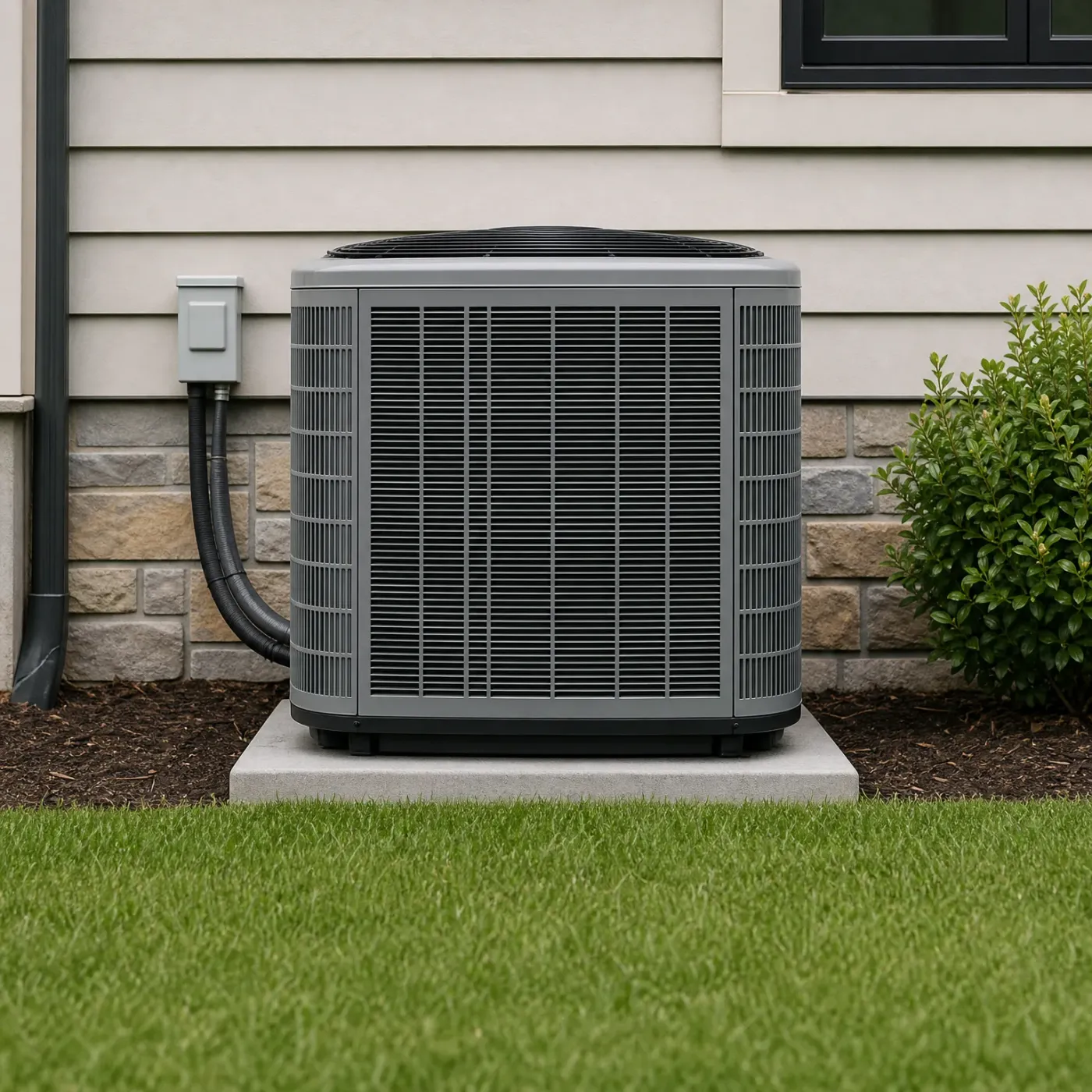
A gray outdoor air conditioning condenser unit on a concrete pad beside a house with horizontal lap siding and a stone veneer base, with a disconnect box and conduit on the wall, mulch bed and shrub to the right, and mowed grass in the foreground.

Clear and running clean

The condenser sits clear on its pad, cabinet open to the air, nothing crowding it but that shrub off to the side. Air moves through the coil the way it's supposed to, so the unit sheds heat without a fight and cycles off instead of running straight through the afternoon.
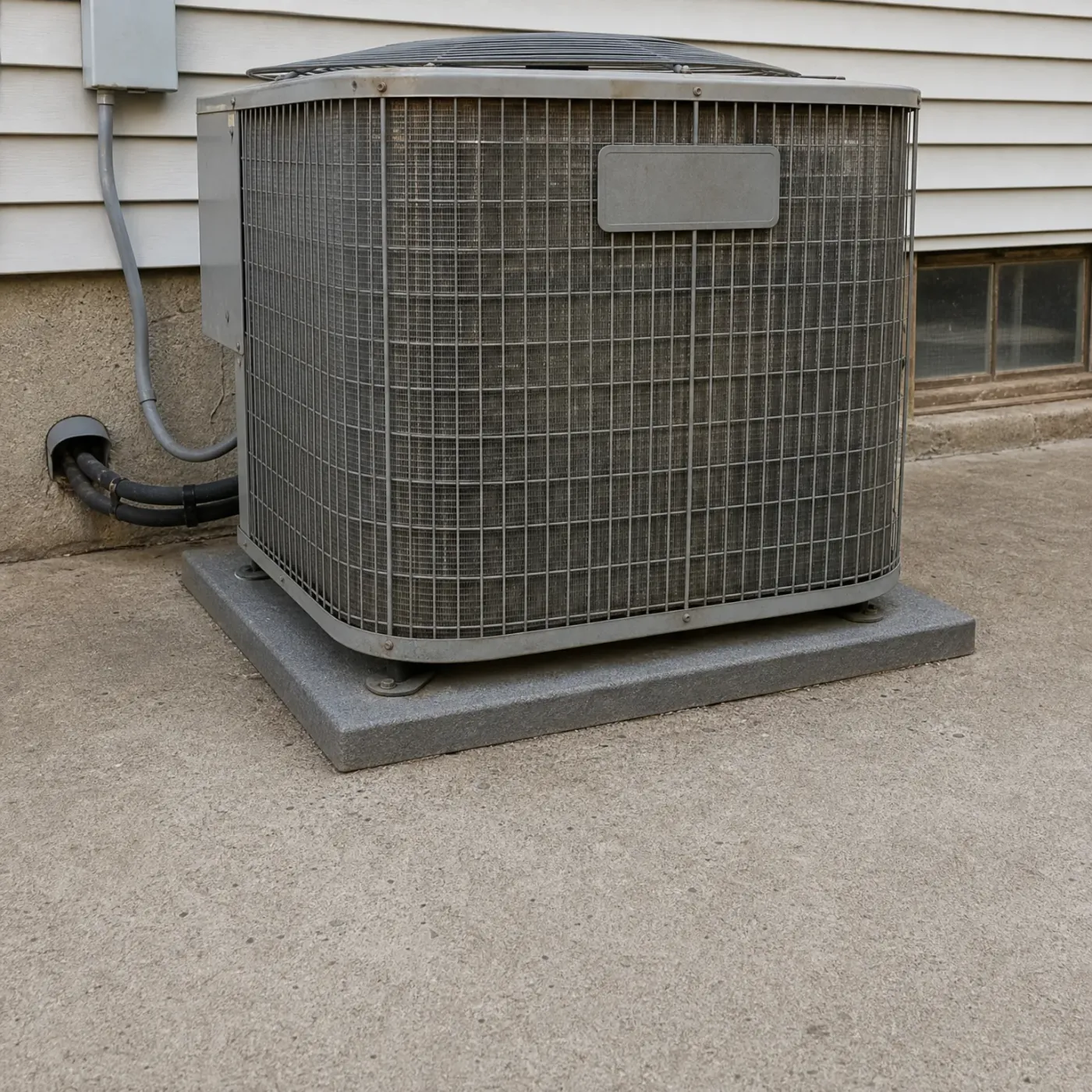
An outdoor air conditioner condenser unit on a gray composite pad beside a house with horizontal siding, a concrete foundation, a basement window, and a conduit and disconnect box on the wall.

Choked on dust

Dust has caked across the mesh, and that's the air this unit now has to pull through to cool itself. A coil caked like this traps heat instead of releasing it, so the system runs longer to reach the same setting, right as it's being asked for the most.

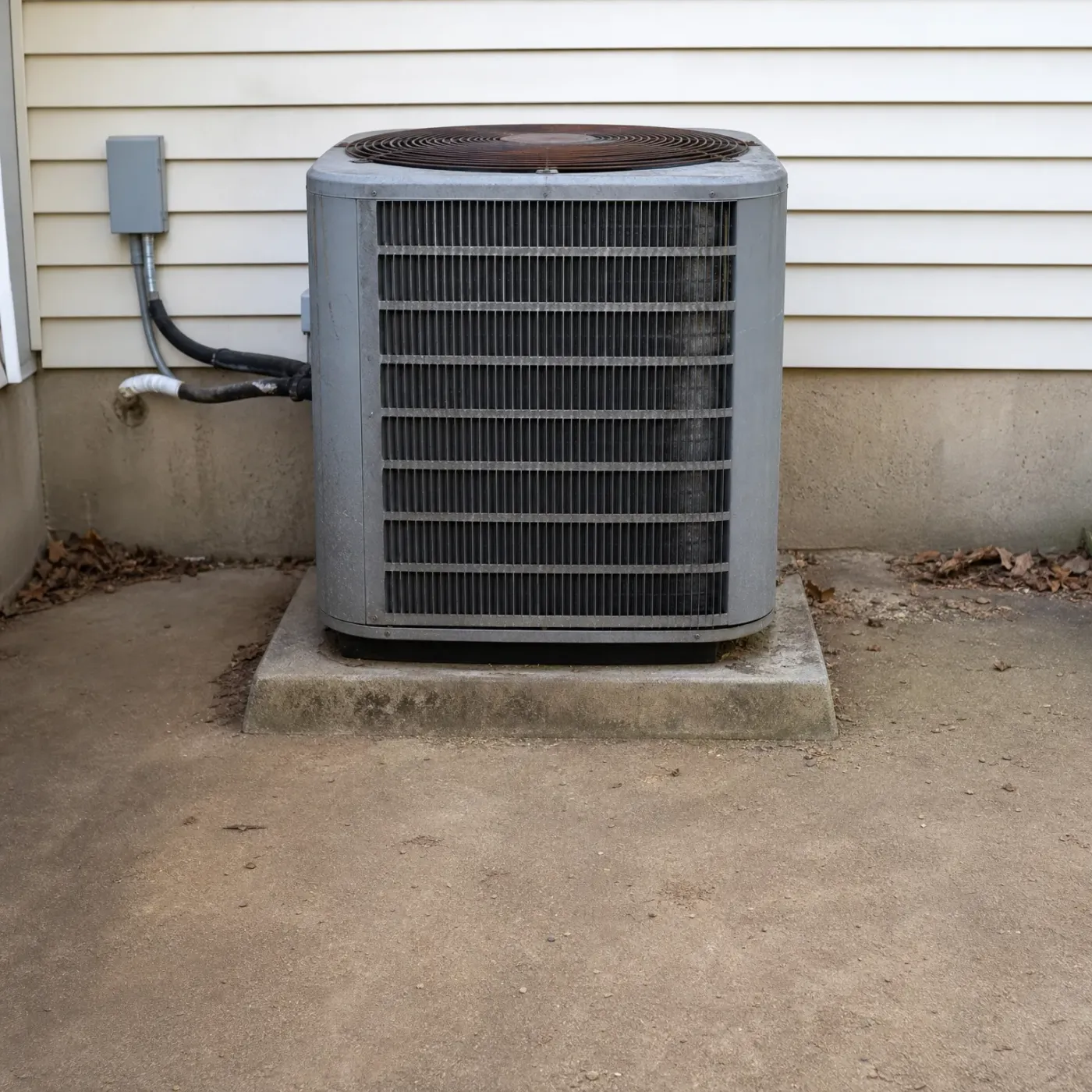
A gray outdoor air conditioner condenser unit on a concrete pad beside a house with beige horizontal siding, with an electrical disconnect box and insulated refrigerant lines on the wall and dry leaves on the ground.
Before you get your air conditioner maintenance
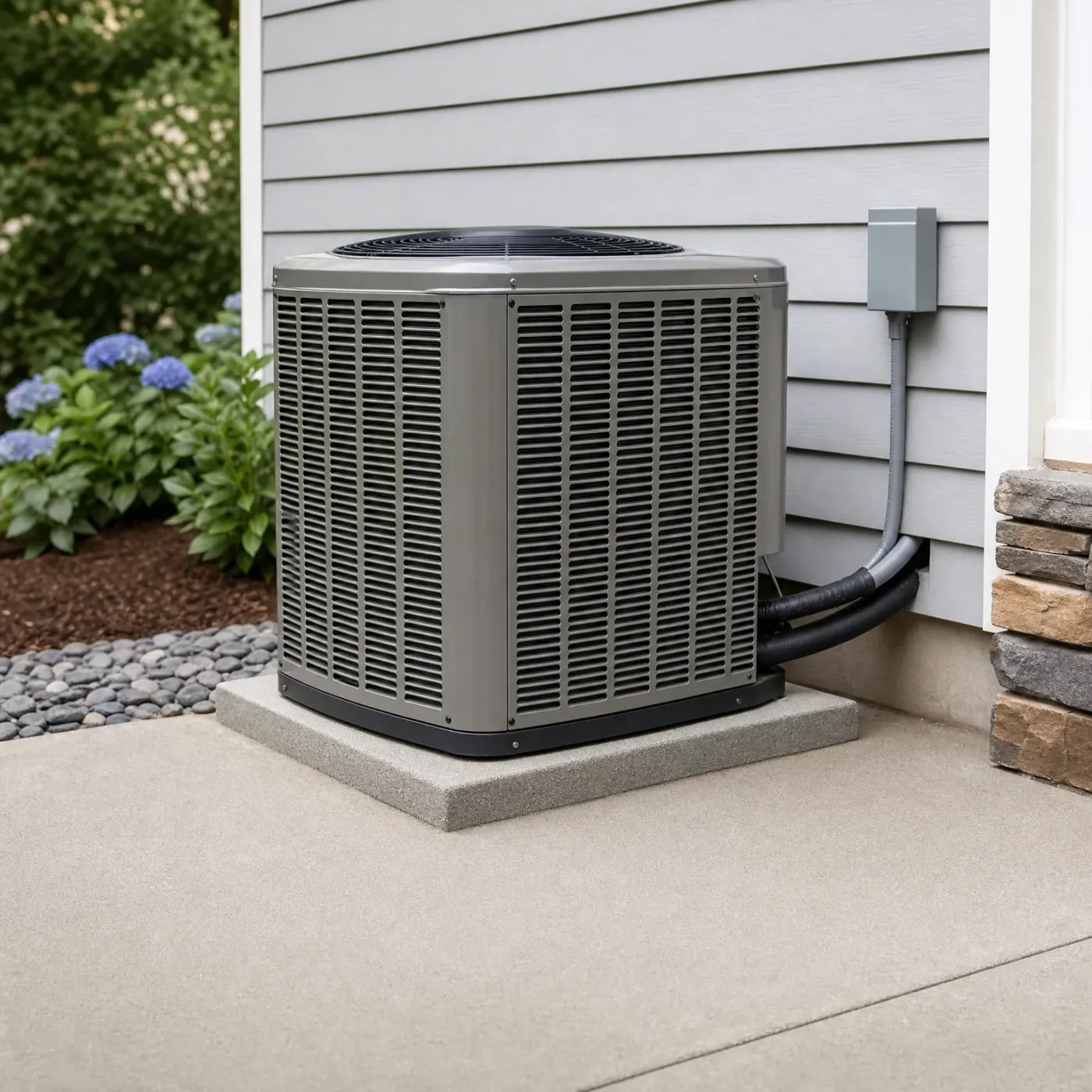
A gray outdoor air conditioning condenser unit on a concrete pad beside a house with horizontal gray siding, with a wall-mounted electrical disconnect box and insulated refrigerant lines, and blue hydrangeas in a mulched bed to the left.
After you get your air conditioner maintenance

Get the right pro for your air conditioner

You know the heat is coming and you know your AC has to be ready for it. What you don't want is the part where you find out who actually checks these units properly. That means pulling up contractor sites, reading reviews that contradict each other, calling three or four companies to ask if they even do maintenance visits, and repeating the same description of your unit each time you get someone new on the phone. Then you're stuck comparing quotes that aren't really quoted the same way, trying to guess which one covers the capacitor test and which one is just a coil rinse. All of that takes time you could spend on anything else, and it still has to happen before the heat arrives, not after your AC is already struggling through a 110 degree afternoon. Answer a few questions here and that search ends. What's left is getting your unit looked at before summer decides whether it was ready.

Checked now, or checked in July

  • A maintenance visit catches a weak capacitor or a low refrigerant charge before either one leaves you without cooling in July.
  • The condenser coil gets cleaned so it can shed heat into air that's already pushing 110 degrees without straining to do it.
  • Checking these things before summer means your AC only has to prove itself on a mild day, not the first 110 degree one.
  • A unit that's been checked over cycles off instead of running long, and that shows up on your bill at 15.26 cents a kilowatt-hour.
  • Skipping this leaves you finding out what's wrong the same week you need the house cool.
  • Getting it checked now means you're not the one calling contractors and comparing quotes once the heat is already here.

Everything above comes down to one choice. You get your AC looked at while it's still mild outside, or you wait and find out what's wrong once it's already 110 degrees and the house is heating up with it. A maintenance visit before summer checks the refrigerant charge, cleans the condenser coil, and tests the capacitor, the same parts that fail under load once the heat sets in. Catching a weak capacitor or a low charge in March means a quick fix. Catching it in July means days without cooling while you scramble to get someone out.

The other part of waiting is what it costs you in time, not money. If you put this off and something does give out mid-summer, you're the one pulling up contractor websites, calling around to see who can come out this week, explaining the same problem to three different people, and sorting through quotes that don't line up. Getting your AC checked now means you skip that. You get matched with a contractor who handles units like yours, and they reach out to you instead of you chasing them down.

Your AC doesn't get easier to work on because you called early. It still has the same parts, the same coil, the same capacitor. What changes is when someone's looking at it, and whether you're the one scrambling when they are.

A single-story stucco house at dusk with a lit paver walkway lined by low path lights, desert plants and boulders in front, and distant mountains under an orange and blue sky.

Air Conditioner Maintenance

A pro who works on air conditioners

Step 1 of 3: Equipment
  • A corner of a room with an upholstered wood-framed armchair holding a floral pillow, a round side table with a ceramic lamp, books and a vase of greenery, a framed landscape painting on the wall, a patterned rug, and a sunlit multi-pane window.
    • Say what's going on with your air conditioner, and a pro who works on them reaches out.
    • A local pro who knows air conditioners gets your details and gets in touch.
  • Interior corner with a wood-framed window showing green foliage outside, a framed landscape print on a beige wall, and a rounded stone vase of leafy branches on a wooden cabinet.
    • Send the form, and lining up the air conditioner tune-up stops being yours to chase.
    • Send the form and the air conditioner tune-up stops being something to remember.
  • A pale ceramic vase holding olive branches sits on a dark wooden countertop beside a carved wooden dough bowl, next to a wood-framed window and a light painted plank wall.
    • One form instead of hunting for a pro who does air conditioner tune-ups.
    • Answer a few questions instead of calling shop after shop.
  • A dark wood round side table holding a brass lamp with a cream shade, a blue-and-white patterned bowl, and a white textured pot of greenery, beside an upholstered chair with a gray patterned cushion and a white-framed window showing green trees and flowering shrubs.
    • A licensed local pro takes the request for your air conditioner tune-up.
    • Your request goes to one pro, not a list of companies.