Profile view of a bearded man wearing a dark green baseball cap and a dark gray T-shirt against a plain light background.

Central AC or mini split for an Arizona home

Step 1 of 3: Equipment

Should I get central AC or a mini split in Arizona?

You're replacing or installing an AC system and keep seeing mini splits mentioned as an option. Arizona summers push any cooling system hard, and you want to know which setup actually holds up here and keeps the house livable from April through October, not just which one costs less to put in.

Central AC is the right call for most Arizona homes

If your home already has ductwork, central AC is built to handle the kind of heat Arizona sees. It cools the whole house evenly from one system, which matters when outdoor temperatures sit well above 100 for weeks at a time. A mini split earns its place in a room the ducts don't reach, like a converted garage or an addition, or in a home that never had ducts installed. But running a mini split as your only cooling for an entire house means every room depends on its own unit working right, and in a summer this demanding, that's more equipment that can fail at the worst time. Central AC paired with existing ductwork gives you one system built for the job.

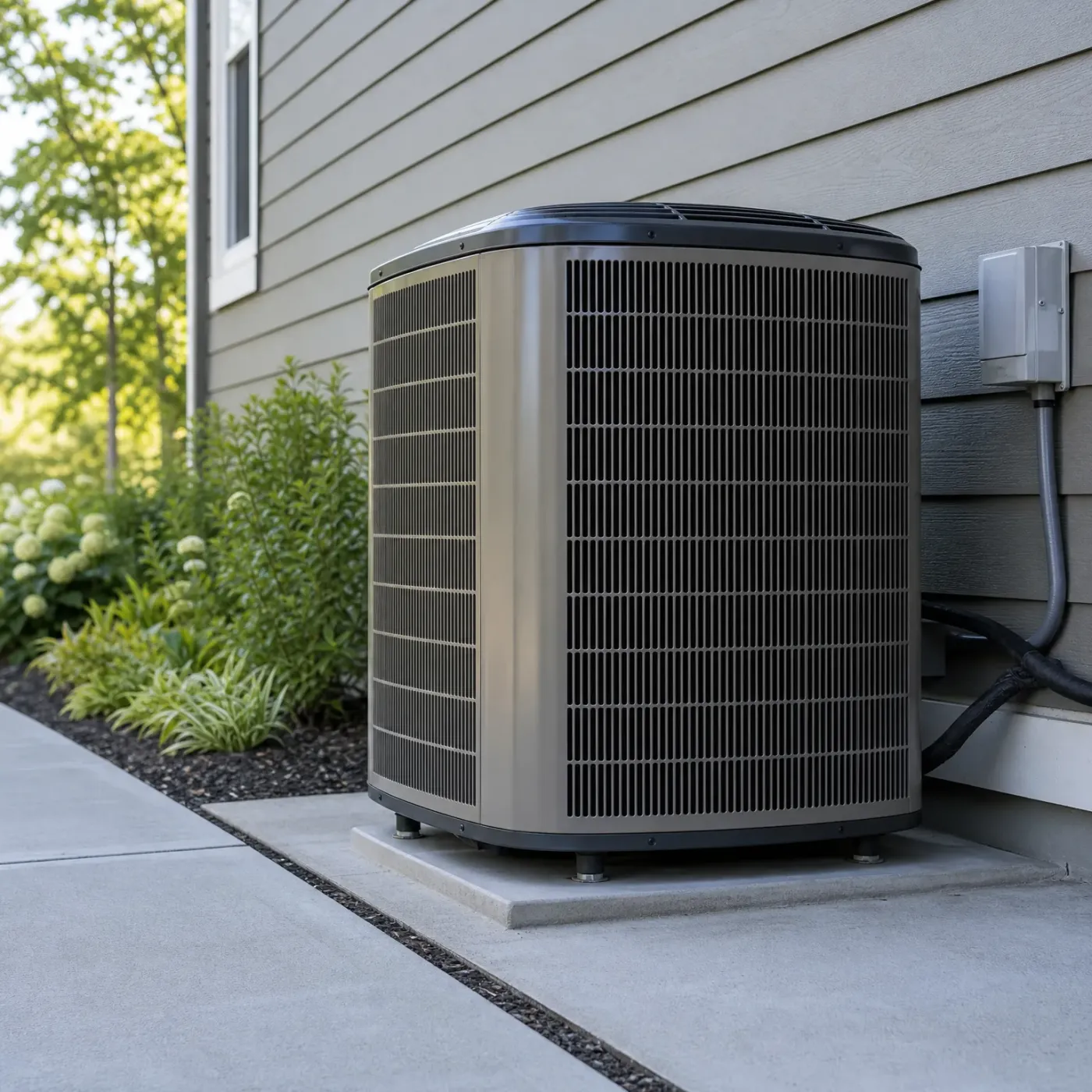
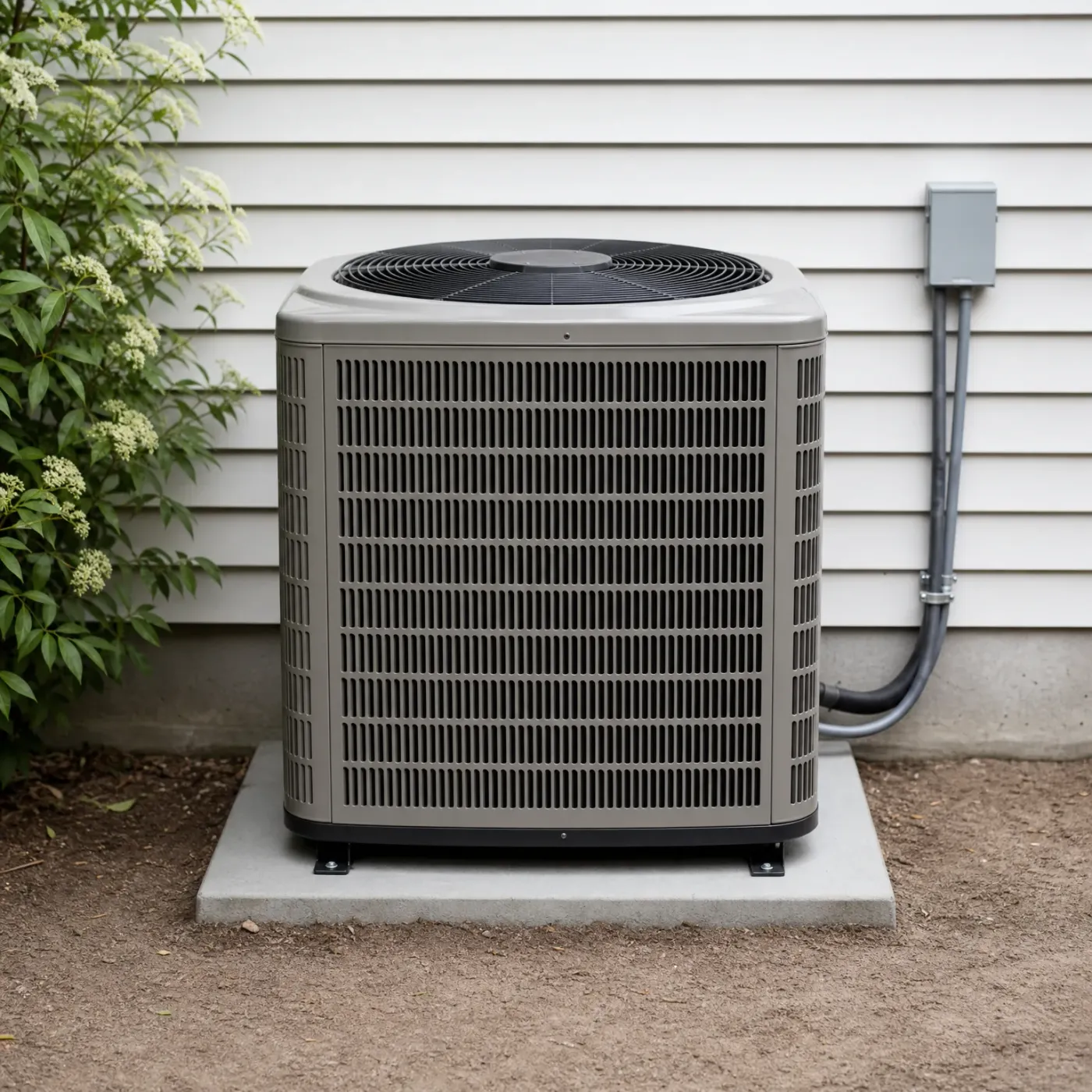
A gray outdoor air conditioner condenser unit on a concrete pad beside a house with horizontal lap siding, with a flowering shrub at left and a disconnect box with conduit on the wall at right.

Central AC: one system, one job

A central AC condenser like this one ties to ductwork already running through your house. It cools every room from one thermostat, and in a place where the AC runs from April into October, that simplicity is worth something. One compressor, one disconnect box, one unit to maintain.
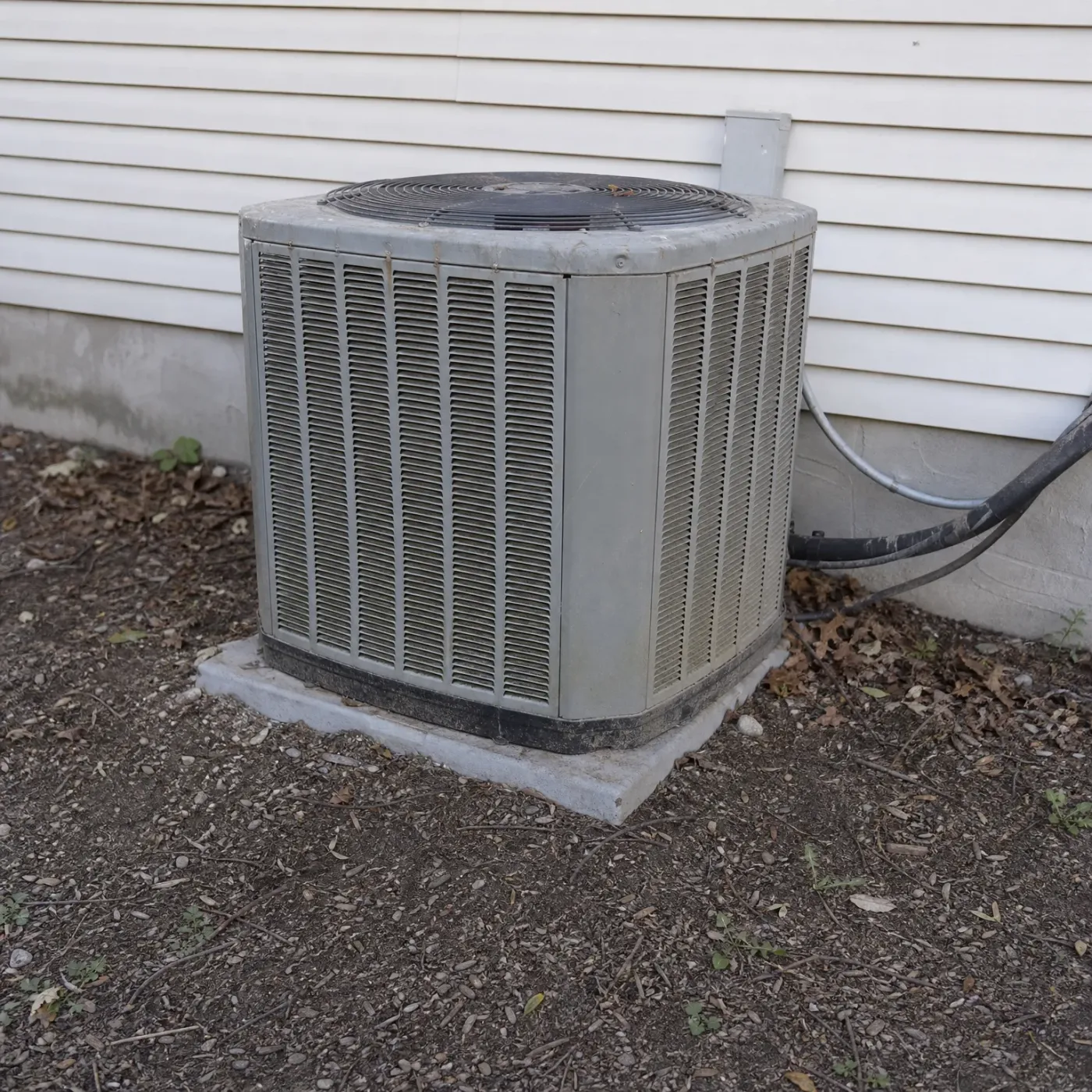

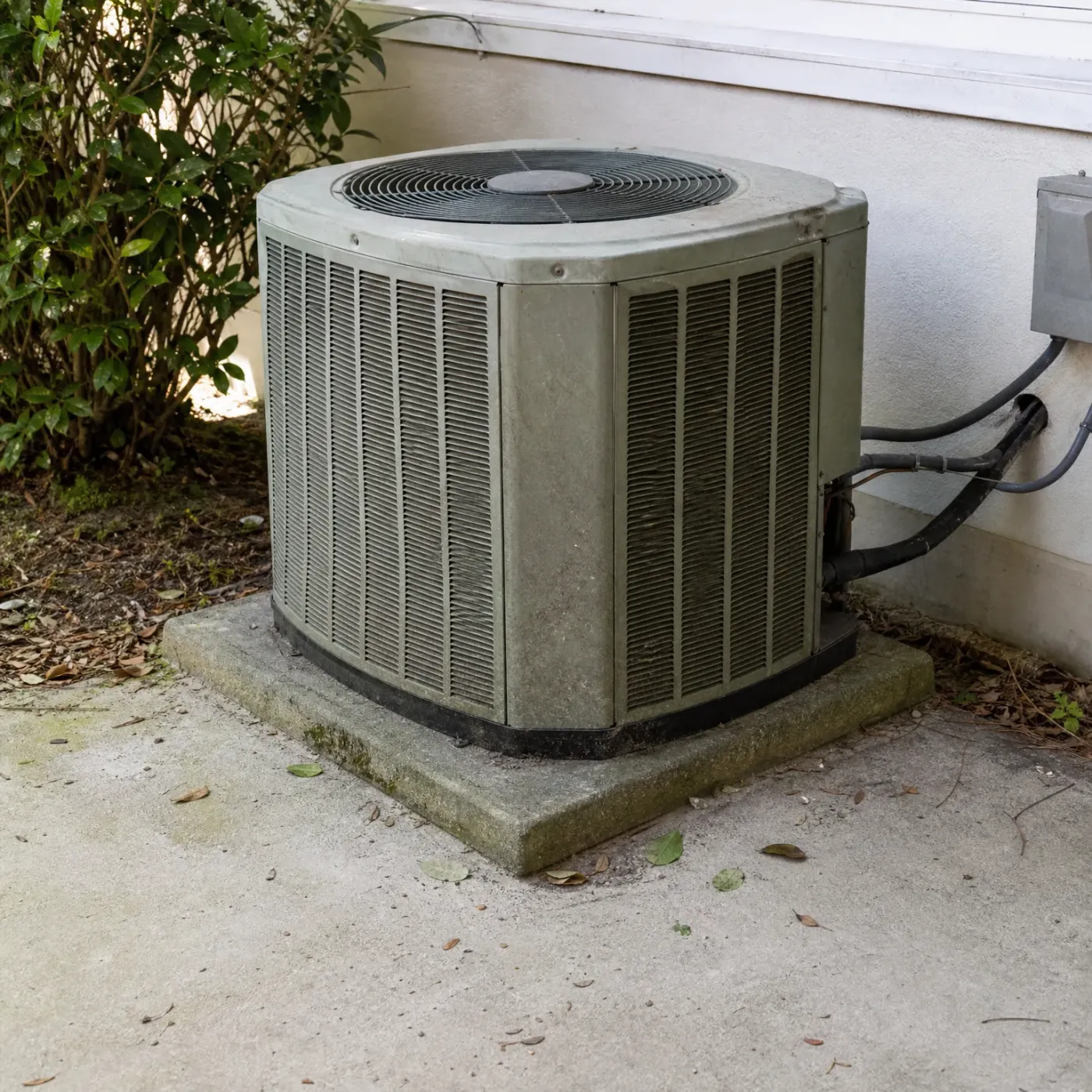
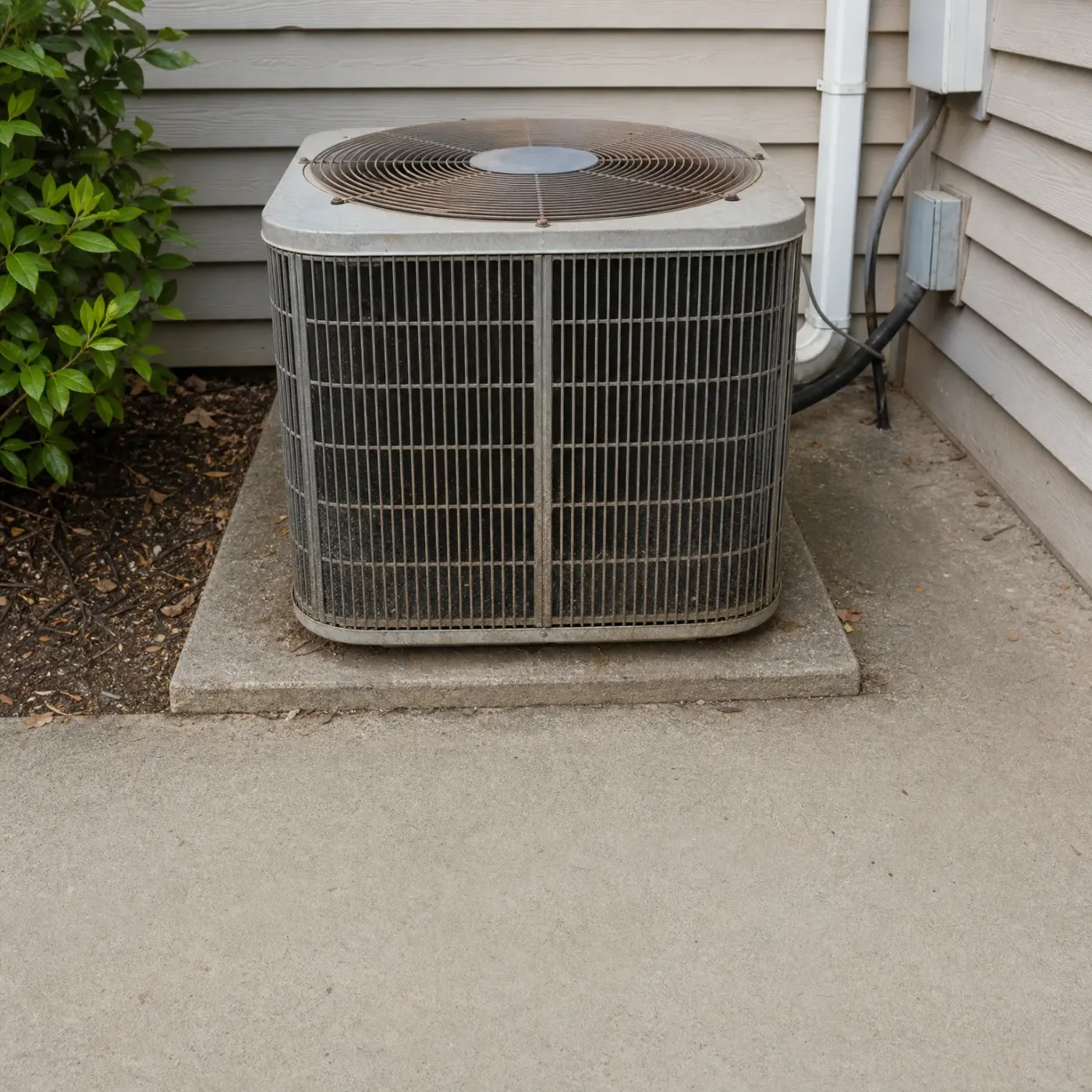
An outdoor air conditioner condenser unit on a concrete pad beside a house with light horizontal vinyl siding, surrounded by bare dirt, gravel and dry leaves, with refrigerant lines and conduit running along the wall.

When the condenser shows its age

Dirt and leaves pile up around the base, and the coil underneath has to work through all of it to shed heat. A unit in this shape is losing efficiency before it ever fails outright. This is the point where a mini split enters the conversation, especially for a room the ducts never cooled well.

A man in a blue sweatshirt reclines with closed eyes in a brown leather armchair in a living room with a bookshelf, houseplant, sofa, window, and a side table holding newspapers and a dark mug.
A bearded man in a gray pullover reclines with closed eyes on a brown leather sofa in a sunlit room with a window, framed picture, potted plant, and a wooden cabinet holding papers and a dark mug.
A man in a gray sweater leans back with closed eyes in a brown leather armchair beside a wooden side table holding a dark mug and a folded newspaper, with bookshelves and a window seat behind him.
A man in a green sweater reclines in an armchair with his eyes closed and a slight smile, beside a window with plants, a small table holding a mug and folded newspaper, and bookshelves behind him.

A central AC system has one compressor built to cool the whole house at once. It switches on at full capacity, runs until the thermostat is satisfied, then shuts off completely. On a 110 degree afternoon that means it starts and stops over and over, and every restart puts load on the compressor. A mini split works differently. Its compressor is inverter-driven, so instead of cycling on and off it slows down or speeds up to match what each room needs. That's easier on the equipment and it's why a mini split can hold a steady temperature without the hard restarts a central system makes all day. The other difference is how the cooled air gets to you. Central AC relies on ductwork, usually running through the attic, and any leak or poorly sealed joint along the way is cooling you paid for that never reaches the room. A mini split skips ducts entirely. Refrigerant runs through a line set straight from the outdoor unit to the indoor head, so there's no duct run to leak and nothing lost in between.

How each system actually cools

  • A central AC condenser has one compressor sized to cool the whole house, so it either runs or it doesn't, no zoning between rooms.
  • A mini split has a separate inverter-driven compressor that ramps up and down, pulling only the power needed to hold the temperature in each room it serves.
  • Central AC cycles on and off at a fixed capacity, which is harder on the compressor when it's 110 outside and the system is starting and stopping all afternoon.
  • An inverter compressor in a mini split slows down instead of shutting off, so it avoids the hard restart that a traditional compressor makes on every cycle.
  • Central AC depends on the ductwork to deliver that cooled air, so any leak or gap in the attic ducts is lost capacity before air reaches a room.
  • A mini split's line set runs refrigerant directly from the outdoor unit to the indoor head, with no duct run and nothing to leak air along the way.
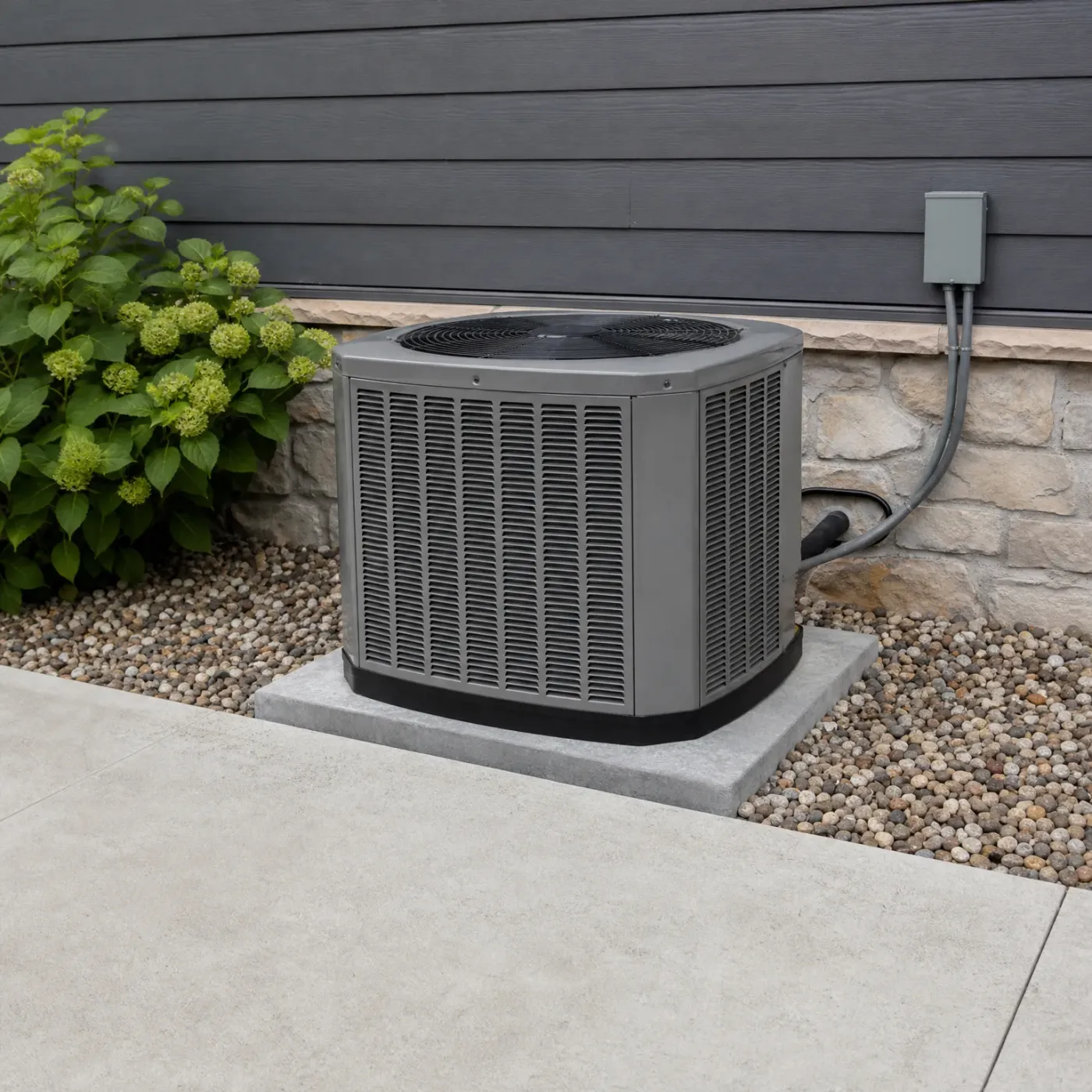
A gray outdoor air conditioner condenser unit on a concrete pad beside a house with dark horizontal siding and a stone base, surrounded by gravel, with a flowering shrub at left and a concrete walkway in front.
A condenser kept clear of grime and sitting level on its pad can run a full Arizona summer without losing capacity.
An outdoor air conditioner condenser unit sits on a concrete pad beside a stucco wall, with refrigerant lines and conduit running to the wall and a shrub to the left.
Fins caked with dust and grease make the compressor work harder to push heat out, and that strain shows up on the bill.

What this means for your house

  • A central AC pulling warm, dusty air through clogged filters all summer runs longer to hit the same thermostat setting.
  • A mini split serving a converted garage or add-on room cools that space without extending ductwork through the attic.
  • If your ducts run through an uninsulated attic, the air loses cooling before it ever reaches the vent.
  • A failed compressor in July means days without cooling in a house that can climb past 90 degrees indoors by afternoon.
  • A mini split head mounted on an exterior wall takes direct sun exposure that a central condenser tucked in shade avoids.
  • Running one central system from a single thermostat means a room nobody uses still gets cooled at the same cost as one you live in.

Your house tells you most of what you need to know here. If the ductwork runs through the attic and that attic isn't insulated well, the air coming off a central system has already lost some of its cooling by the time it reaches you, and no filter change fixes that. A clogged filter makes the problem worse on its own, forcing the compressor to run longer to hold the same setting, and that shows up as higher bills before it shows up as a warm room. Where you have one room that doesn't fit the pattern, a garage someone finished, a bonus room added after the ducts were run, a mini split handles that space on its own compressor without opening up the attic to extend a line. The tradeoff is where that unit sits. A head mounted on a wall that takes afternoon sun works harder than one in shade, the same way a central condenser tucked against the north side of the house has an easier summer than one baking on bare concrete. And with one central system on one thermostat, a spare bedroom you walk into twice a week gets cooled at the same cost as the room you're sitting in right now. None of this is a reason to avoid either system. It's what decides which parts of your house benefit from which kind of fix, and what a contractor walking through your place would actually look at before recommending one over the other.

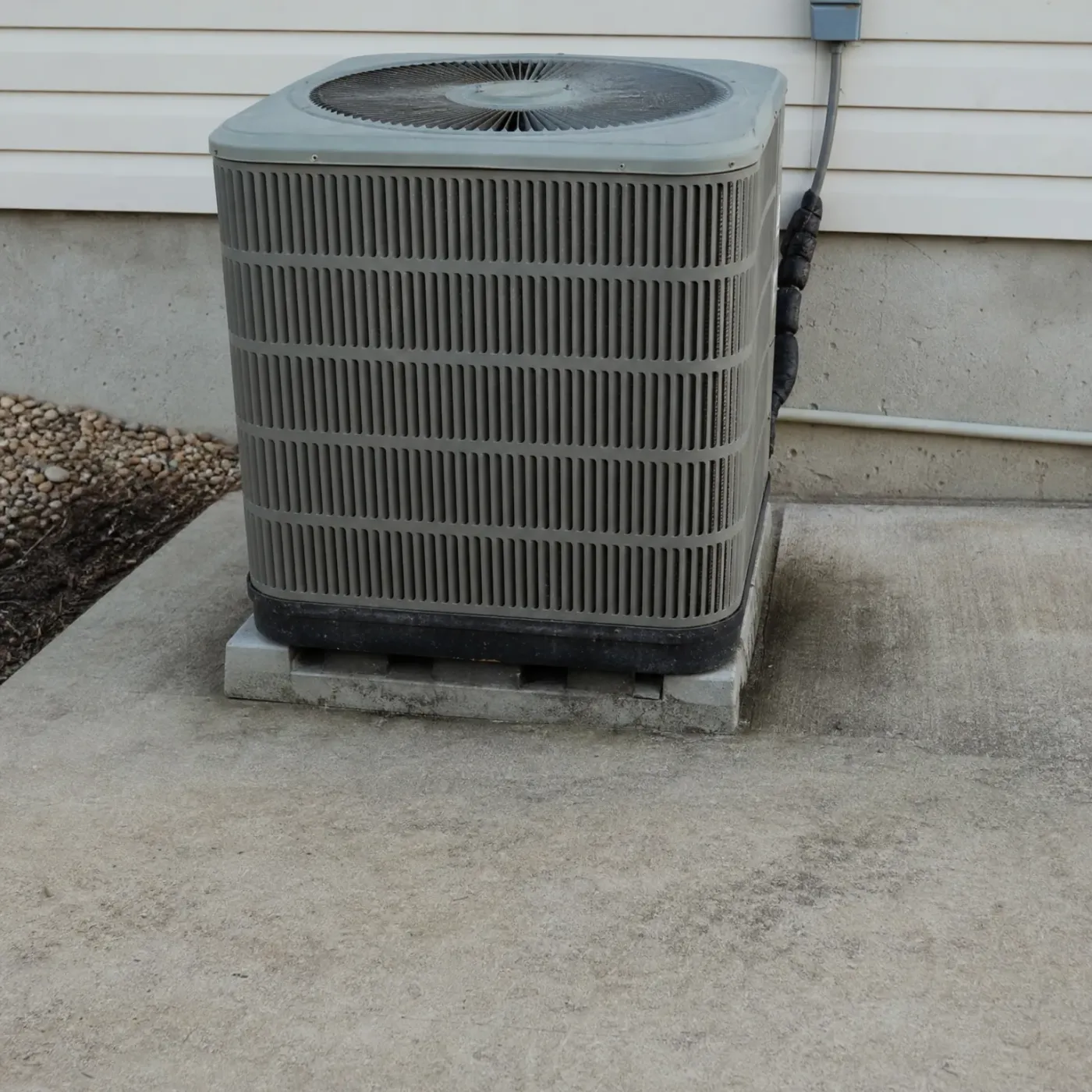
An outdoor air conditioner condenser unit sits on a gray pad beside a light vinyl-sided wall, on a concrete slab next to a gravel bed.
Before you get your air conditioner installation
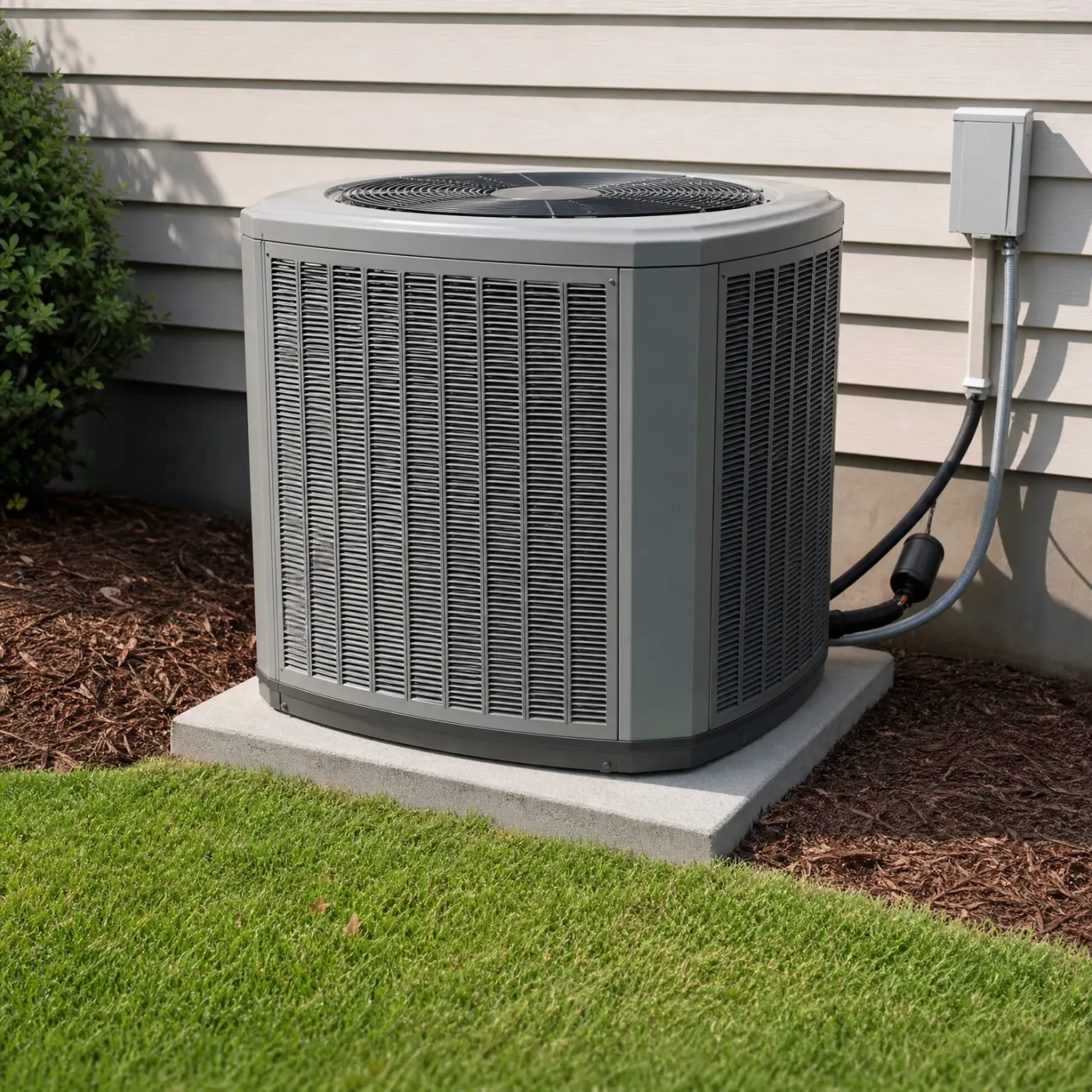
A gray outdoor air conditioner condenser unit on a concrete pad beside a house with horizontal lap siding, with a wall-mounted disconnect box and conduit, mulch bed, shrub, and lawn nearby.
After you get your air conditioner installation
An outdoor air conditioning condenser unit on a concrete pad beside a house with horizontal lap siding, with a gray electrical disconnect box and conduit on the wall and green shrubs and trees to the left.

One request and it's handed off

Only one pro gets your request, so you hear from one company.

Send the form and stop researching installers for the new air conditioner.

Get a licensed local pro

You only hire the pro if you want to.

Which Fits Your House

Choose central AC if

  • Your house already has ductwork running through it and that ductwork is in good shape.
  • You want every room on one thermostat instead of managing settings room by room.
  • You're replacing a condenser that failed rather than adding cooling to a space that never had it.
  • A single system with one compressor is less to keep track of than several indoor units.
  • You'd rather size one piece of equipment to the whole house than match units to each room.

Choose a mini split if

  • You're cooling a converted garage, a sunroom, or an add-on that your ducts never reached.
  • You want to set one room cooler than the rest without changing the temperature everywhere else.
  • Running new ductwork through your attic isn't something you want to take on.
  • You're adding cooling to a single space rather than replacing a whole-house system.
  • A separate indoor unit for the room that runs hottest matters more to you than one thermostat for the house.
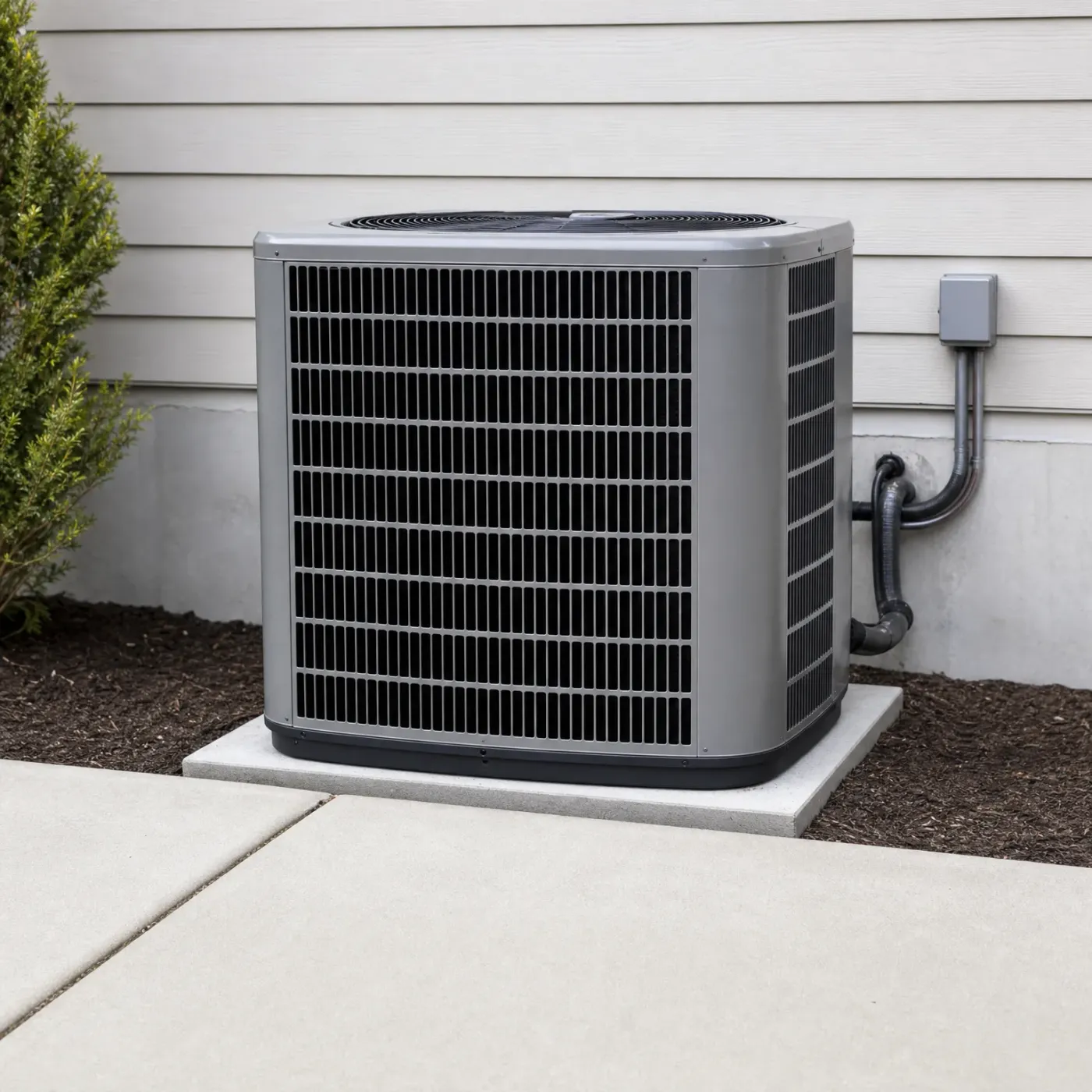
A gray outdoor air conditioner condenser unit sits on a concrete pad beside a house with horizontal lap siding, with conduit and an electrical disconnect box on the wall, dark mulch and a shrub to the left, and a concrete walkway in the foreground.

Condenser running clean

This is what a healthy setup looks like: unit level on its pad, lines and conduit running straight into the wall, grilles clear. Nothing blocking airflow around it. A condenser kept like this can run an Arizona summer, April through October, without the compressor straining to keep up.

An outdoor air conditioning condenser unit on a concrete pad beside a house with horizontal lap siding, with a shrub and mulch bed to the left and conduit and a small electrical box on the wall to the right.

Condenser showing its age

Grime caked on the grilles, dust built up around the base, years of summer heat on an aging cabinet. This is the point where a homeowner starts asking whether to replace the same setup or switch to a mini split instead. What's underneath the dirt, and what's left of the compressor, decides which answer fits.

Power costs 15.26 cents per kilowatt-hour statewide

At that rate, a system that runs efficiently costs you less every July and August than one losing capacity to a dirty coil or a bad duct run. With an AC working from April into October, the difference between a well-matched system and an oversized or neglected one shows up on every bill, not just one.

EIA-861 2025 statewide residential average

  1. A contractor measures each room to size the system correctly

  2. The condenser or outdoor compressor goes in on a level pad

  3. Line sets and conduit run from outdoor unit to indoor units

  4. Ductwork connects, or indoor wall units mount directly to studs

An older man with gray hair and a beard leans back on a beige sofa with his eyes closed, in a sunlit room with potted plants, a wicker chair and large windows behind him.
A woman in a cream knit sweater sits in an armchair with her eyes closed and a slight smile, beside an open window showing orange autumn foliage, with a mug, books and a lit candle on a small side table.
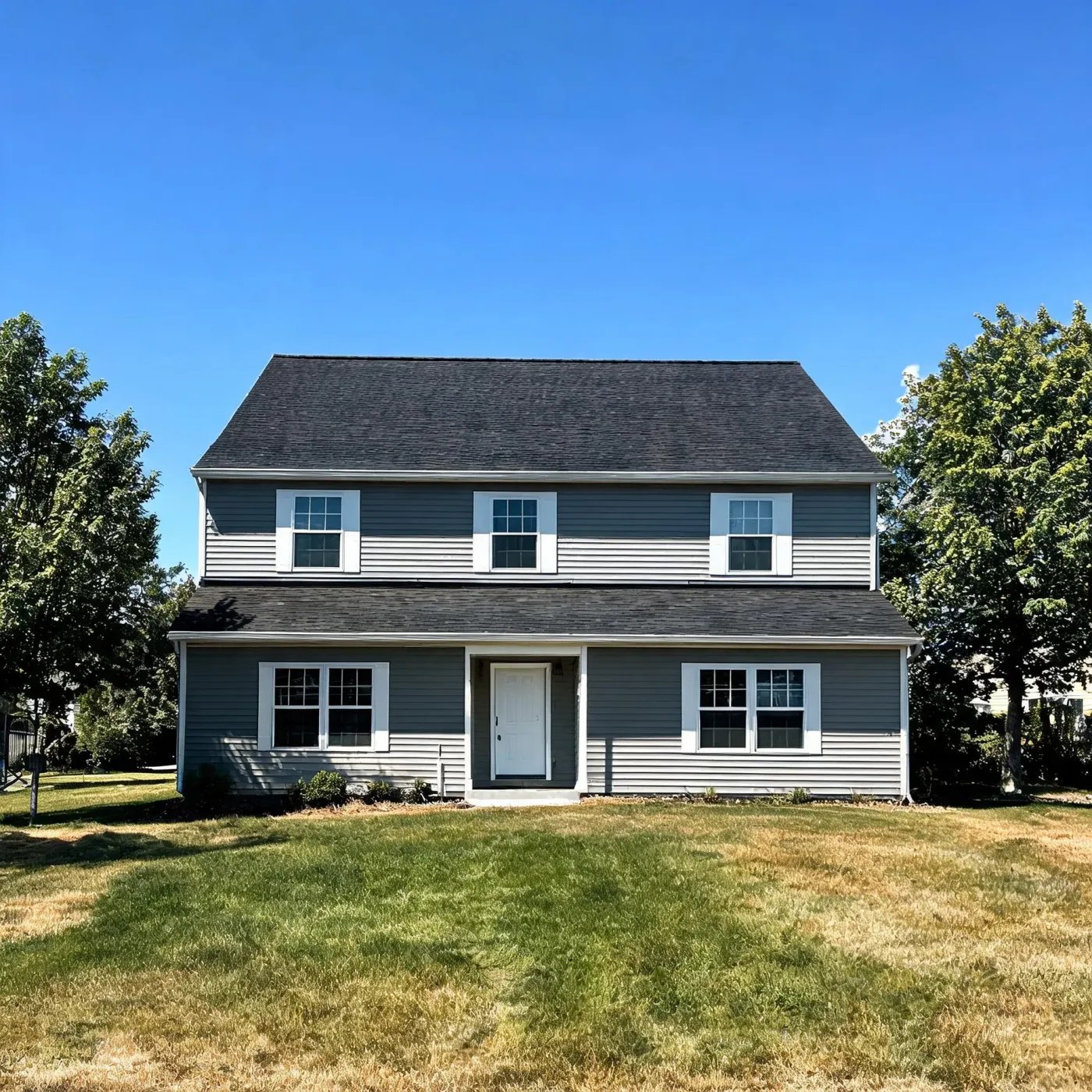
A two-story house with gray and light gray siding, white-trimmed windows and a white front door, flanked by deciduous trees, with a partly browned lawn in front under a clear blue sky.

Dry heat is the thing people say about Arizona, and it's true where it counts most for your AC. The summer dew point here averages 47°F across June, July and August, which is low enough that your system spends most of its effort just dropping air temperature, not wringing moisture out of it first. That's a lighter job for a compressor than the same heat with damp air behind it. What you notice at home is a house that cools fast once the thermostat calls for it, and a return vent that never feels clammy even on the hottest afternoon. Source: NOAA climate normals.

NASA POWER T2MDEW county cells weighted by homes

What's telling you your system can't keep up

You notice it room by room before you notice it on the thermostat. The garage you converted into a bedroom runs warmer than the rest of the house no matter where you set the temperature. A hallway or upstairs room lags behind the living room by several degrees. Maybe the condenser outside runs almost constantly through the afternoon and the house still doesn't feel caught up by evening. If you've patched in ductwork to reach an add-on room, that run is often where the real loss is happening, warm attic air leaking into the duct before it ever reaches the vent. Left alone, that's a system working harder than it should every day from April into October, and a bill that reflects it.

A dim bedroom with an unmade bed beside a window holding a box fan, with sheer curtains, a lamp at right and a large blank wall at left.

By nine the sun's been down for hours and the room still hasn't let go of the heat. The box fan in the window just moves the same warm air around. You're on top of the sheets, not under them, and the fan's hum is the only sound in the house. Downstairs the thermostat probably reads close to where you set it. Up here it doesn't feel like it. You've stopped trying to fall asleep and started doing the math on how many hours are left before the alarm goes off, and whether it's worth getting up to check the vent in the hallway again.

Central AC and a mini split both cool an Arizona house through the summer. Which one is right comes down to what's already in your walls and what you're trying to fix, whole house or one bad room. A contractor who installs both kinds of systems every summer here has seen which ductwork runs are worth keeping and which condensers get undersized for the house they're set in. Send your request and you're matched with one licensed local contractor, not a handful of companies competing for the callback. They'll look at your house, not a general case, and tell you straight whether central air or a mini split is the better fit before anything gets installed.

A single-story house with a dark tile hip roof, stucco walls and stone-clad entry, with a saguaro cactus in the left foreground and desert hills and mountains in the background.

Done looking for an air conditioner pro

Reach a local pro

Asking costs nothing, and the choice to hire stays yours.

A system sized wrong or installed in a hurry shows up in your bill every July and August from then on. Getting the right setup matched to your house now, instead of guessing, is the difference between a summer you don't think about and one you spend fighting your thermostat.